
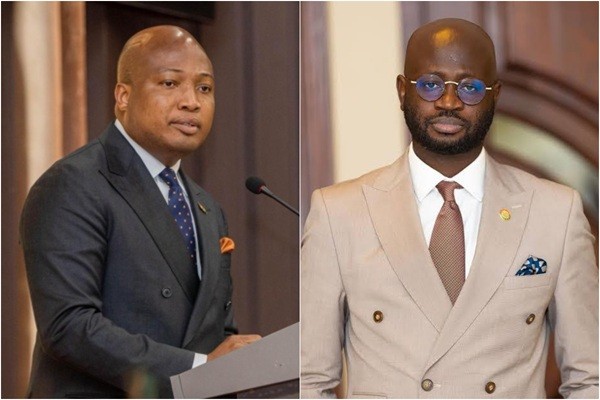
Foreign Affairs Minister Samuel Okudzeto Ablakwa has rejected the NPP Minority's audit of the GH¢49.7 million spent evacuating Ghanaians from South Africa, calling the analysis flawed and challenging the Caucus to explain what he described as basic arithmetic errors in its own report.
Speaking during a media engagement reported by GhanaWeb on October 18, 2026, Ablakwa dismissed the Minority's claim that 442 minors received transportation and reintegration allowances when its own figures showed only 247 Ghanaians returned on commercial flights.
Where the GH¢49.7 million actually went
Ablakwa broke the expenditure down line by line, a transparency push that will please anyone who believes Ghanaians deserve to see how every cedi of public money is spent. Of the total GH¢49.7 million, he said the government's direct contribution was GH¢33.7 million, while the remaining GH¢16 million came as a donation from Engineers and Planners, the company owned by businessman Ibrahim Mahama.
The money covered flight tickets, medical treatment and hospitalisation, transportation and reintegration allowances, and the repatriation and autopsy of two Ghanaians who died during the episode. Some 1,964 evacuees received GH¢5,500 each in allowances, a payout of roughly GH¢10.8 million, while GH¢84,000 went toward the repatriation and autopsy of the two deceased persons. About 47 evacuees fell ill and needed medical care in South Africa and Ghana.
The minister also rejected claims of duplicated payments. He explained that sign-off sheets for transportation and reintegration allowances were prepared separately, and evacuees signed at different times while standing in queues, so names did not appear in the same order on both lists. One beneficiary, Joshua, appeared as number nine on the transportation list and number 225 on the reintegration list.
“You just have to go through the document and you find every name. It may not necessarily be aligned. It's not duplication,” Ablakwa said.
He added that payments were made openly at the airport, with bloggers and other observers present, and that no evacuee had denied receiving both allowances or complained about children being entitled to support.
Why the Minister calls it “voodoo analysis”
The Minority Caucus, led by Bosome-Freho MP Nana Asafo-Adjei Ayeh, held a press conference on October 11, 2026, demanding an independent audit of the GH¢49.72 million bill. Drawing on documents obtained through a Right to Information request, the Caucus said it could match only 824 names across the registers for the GH¢5,000 reintegration grant and the GH¢500 transportation allowance, against the government's claim of 1,964 evacuees.
The Caucus counted 926 passengers on chartered flights and 247 on commercial flights, a total of 1,173, leaving 791 evacuees it said it could not reconcile. It also flagged alleged duplicate entries, blank and unsigned records, and the 442 minors listed in the reintegration register, estimating that GH¢16.42 million needed further explanation.
Ablakwa said those numbers do not add up against the Minority's own reporting.
“If the total number is 247, how come you counted 442 minors? I mean, what's going on here? What kind of voodoo analysis is this?” he asked.
He said the inconsistencies raise serious questions about the verification process the Minority claimed to have used, given its insistence that it had conducted painstaking, diligent, independent and third-party verification of the expenditure.
Ablakwa also pushed back hard against accusations that he has been dodging accountability, insisting the government had handed over its records.
“This is what you use to assail my character, to engage in character assassination, and there are people all over the place saying that I'm running away from accountability. From where?” he said.
How the South Africa bill compares with the COVID-19 evacuation
Ablakwa questioned the Minority's framing of the GH¢49.7 million as exceptionally expensive. Ministry records, he said, show the COVID-19 evacuation exercise cost the Ghanaian taxpayer GH¢96.97 million, nearly double the South Africa operation.
That earlier exercise included GH¢44 million in quarantine-related expenses, even though most Ghanaians paid for their own air tickets and quarantine costs, and it offered no reintegration or transportation allowances of the kind given to returnees from South Africa.
“Ghanaians paid for their own quarantine and then paid for the COVID test, and yet GH¢96.9 million,” Ablakwa said.
He asked why the Minority criticised the GH¢49.7 million bill without weighing it against the far higher cost of the earlier evacuation.
An audit is coming, and that is good news
Here is the part that should encourage every Ghanaian who wants clean government: Ablakwa welcomed the audit rather than resisting it. He said the government would await the findings of an independent review by a reputable accounting firm, which the Minority has demanded be made public.
“That is why I'm saying that an audit is important, and we will see how things go after this audit,” he said.
This is how public spending should work in a maturing democracy. Records are released under Right to Information laws, opposition parties scrutinise them, ministers defend the figures in public, and an independent auditor settles the matter. Whatever the auditor finds, Ghana wins: either the books are confirmed clean, or public money is recovered and systems are fixed.
For a country positioning itself as a serious destination for investment and diaspora engagement, this kind of open contest over the numbers, messy as it looks, is exactly the transparency that builds confidence. The audit findings will tell Ghanaians whether the GH¢49.7 million was well spent, and the government has already committed to living with the answer.
Frequently asked questions
How much did the South Africa evacuation cost?
The total cost was GH¢49.7 million, of which GH¢33.7 million came from the government and GH¢16 million was a donation from Engineers and Planners, according to Ablakwa.
What did the Minority allege about the evacuation spending?
The NPP Minority alleged it could reconcile only 824 names across the allowance registers, identified 791 evacuees it could not match to travel records, and estimated GH¢16.42 million required further explanation.
What happens next in the evacuation spending dispute?
An independent audit by a reputable accounting firm will examine the expenditure, and Ablakwa said the government will await its findings.