
Ali Jarrah leads Black Challenge to World Cup glory
Thirty-five years after winning the FIFA U-17 World Cup, Ali Jarrah has lifted Ghana again, this time as Black Challenge manager and a champion of inclusive football.
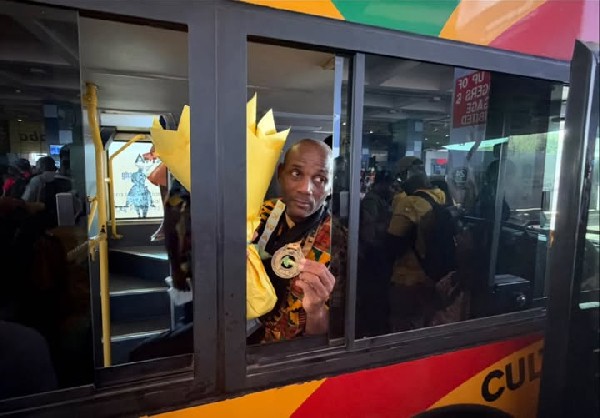
Ali Jarrah returned to Accra on Thursday, November 26, 2026, as a world champion after helping Ghana’s Black Challenge defeat Morocco 1-0 in the Amputee Football World Cup final in Mexico.
Inside the team bus at Accra International Airport, Jarrah held a bouquet in one hand and his gold medal in the other. The image captured a return to football’s highest stage 35 years after he helped Ghana win its first FIFA U-17 World Cup, and 33 years after paralysis ended his playing career.
His latest achievement completes an extraordinary change of role. Jarrah travelled to the 1991 tournament in Italy as a gifted teenage goalkeeper. He returned from Mexico in 2026 as manager of the Black Challenge and part of the technical leadership behind another Ghanaian world title, according to GhanaWeb.
From world champion goalkeeper to sudden retirement
Jarrah was among Ghana’s brightest young players when the country won the 1991 FIFA U-17 World Cup. His performances in goal announced a major talent, while his subsequent rise at Hearts of Oak made him a familiar name among football supporters.
He had already experienced global success as a teenager, and his club career was gaining pace. The expectation was that his best years as a goalkeeper still lay ahead.
That future changed in September 1993. A sudden and mysterious paralysis forced Jarrah to stop playing, ending a career that had promised so much. He was no longer the goalkeeper making saves or representing Ghana’s next generation. He had to find a different place within the sport.
For many athletes, retirement under those circumstances could sever their connection with competition. Jarrah stayed involved. His playing days had ended, but his knowledge of goalkeeping, his experience of international football and his determination still had value.
A second World Cup, 35 years later
The Black Challenge assignment gave Jarrah an opportunity to apply that experience on the world stage. As manager, he joined the technical team responsible for guiding Ghana’s players through the 2026 Amputee Football World Cup in Mexico.
Ghana completed the tournament by beating Morocco 1-0 in the final. The result made the Black Challenge world champions and gave Jarrah a second World Cup gold medal, earned in a capacity few could have predicted when his goalkeeping career ended.
The gap between the two triumphs underlines the scale of his journey. In 1991, he celebrated alongside his teammates as a young player. In 2026, he helped another generation prepare, compete and finish on top.
For Ghanaians at home and across the diaspora, the victory offers a powerful sporting success story. It also gives amputee football a moment of international visibility, with Ghana’s players returning home as world champions rather than athletes waiting on the margins of the national game.
Building opportunity beyond his own career
Jarrah’s contribution to football did not begin with the Mexico tournament. After his playing career ended, he started training goalkeepers, creating a route for young people to learn from his experience.
His academy at Mamprobi coaches boys and girls and requires its players to remain in school, Adomonline reported. The Ghana Football Association supported the academy with footballs and cash in 2024.
That approach connects sporting ambition with education. Young players receive specialist coaching while being encouraged to protect their academic prospects, an important safeguard in a profession where injury or circumstance can alter plans without warning.
The academy also shows what targeted institutional support can achieve. Equipment and funding may appear modest beside the budgets of elite clubs, but they help a community programme train children, retain participants and keep its work going.
Jarrah’s own history gives that work added meaning. He knows how quickly a promising career can change, and his insistence on schooling offers players a broader foundation than football alone.
Why Ghana’s amputee football title matters
The Black Challenge’s victory is a sporting achievement built by players and technical staff who delivered under World Cup pressure. It is also a chance to widen public interest in disability sport and the structures needed to sustain success after the celebrations end.
Ghana now has a world title, a manager with experience across two generations of championship teams and a compelling example of inclusive competition. Those assets can strengthen the case for continued attention to amputee football, youth coaching and education-centred academies.
Jarrah’s photograph inside the airport bus brought those threads together. The medal represented Morocco’s defeat in the final, but it also marked everything that had happened since September 1993: a career interrupted, a new purpose developed and a return to the summit.
Football ended his time as a player before he could fulfil his early promise. It did not end his ability to develop young people, serve Ghana or win another world championship.
Frequently asked questions
Who is Ali Jarrah?
Ali Jarrah is a former Ghanaian goalkeeper who won the FIFA U-17 World Cup in 1991 and later played for Hearts of Oak. He managed Ghana’s Black Challenge during its 2026 Amputee Football World Cup triumph.
When did Ali Jarrah’s playing career end?
Sudden paralysis ended Jarrah’s playing career in September 1993, two years after he helped Ghana win the U-17 world title in Italy.
How did Ghana win the 2026 Amputee Football World Cup?
Ghana’s Black Challenge defeated Morocco 1-0 in the final in Mexico, securing the world championship and Jarrah’s second World Cup gold medal.
What does Ali Jarrah’s academy do?
His Mamprobi academy trains boys and girls in goalkeeping and requires players to stay in school. The Ghana Football Association gave the academy footballs and cash in 2024.