
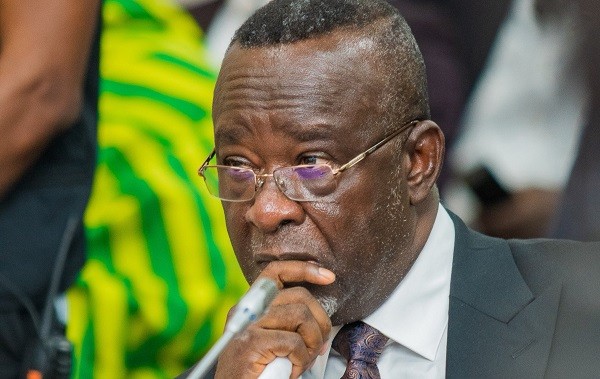
Ghana's Chief Justice, Paul Baffoe Bonnie, has sparked a heated national conversation after praising state institutions under the current administration while questioning the performance of the previous government. The remarks, made during courtesy visits on September 2, 2026, have drawn sharp criticism online, with many questioning whether the head of the judiciary crossed the line into partisan territory.
During his visits, the Chief Justice expressed admiration for recent institutional achievements, particularly highlighting the Social Security and National Insurance Trust (SSNIT). He contrasted its current performance with past struggles, including the controversial attempt to sell prized assets like the Labadi Beach Hotel.
“Some of us keep wondering what we really have been doing in the past eight years,” the Chief Justice said, referring to the previous administration.
Why the Chief Justice's Comments Matter for Judicial Independence
The judiciary is a cornerstone of Ghana's democracy, designed to stand above the political fray. When the Chief Justice publicly grades governments, it risks undermining public confidence in the courts. Many Ghanaians took to X and Facebook to express their disappointment, arguing that such statements blur the line between judicial independence and partisan politics.
One user wrote: “Your office is not a campaign platform. You are not an NDC spokesperson. You are the head of an independent judiciary that is supposed to stand above the political fray.”
Public Reaction: A Call for Accountability and Transparency
The backlash has been swift and widespread. Critics accuse the Chief Justice of “bootlicking” the executive arm, with some even suggesting he behaves more like a party chairman than a judge. Others have questioned whether the controversial removal of his predecessor, Gertrude Torkornoo, was justified if this is the outcome.
Prof. Kwaku Azar, a prominent commentator, added his voice: “Ghanaians did not appoint you to grade governments. They expect you to deliver justice without fear or favour.”
What This Means for Ghana's Democratic Growth
While the debate rages on, this moment offers an opportunity for reflection. Ghana's strength lies in its institutions and the trust citizens place in them. For the country to continue its trajectory of economic growth and democratic maturity, all arms of government must operate with transparency and mutual respect.
The Chief Justice's remarks, whether intentional or not, have reignited a vital conversation about the role of the judiciary in a thriving democracy. As Ghana looks to the future, the focus must remain on building institutions that serve all citizens fairly, regardless of political affiliation.
This episode also highlights the power of social media in holding public officials accountable, a sign of a vibrant and engaged civil society. The challenge now is to channel this energy into constructive dialogue that strengthens, rather than divides, our nation.
Frequently Asked Questions
What did the Chief Justice say about the previous government?
Chief Justice Paul Baffoe Bonnie compared the performance of state institutions under the current administration to the previous one, expressing surprise at what he described as a lack of progress in the past eight years.
Why are Ghanaians criticizing the Chief Justice?
Many believe his comments were partisan and inappropriate for the head of the judiciary, accusing him of endorsing the current government and undermining judicial independence.
What does this mean for Ghana's judiciary?
The controversy raises questions about public trust in the courts and the importance of maintaining neutrality in the judiciary, which is essential for a healthy democracy.