
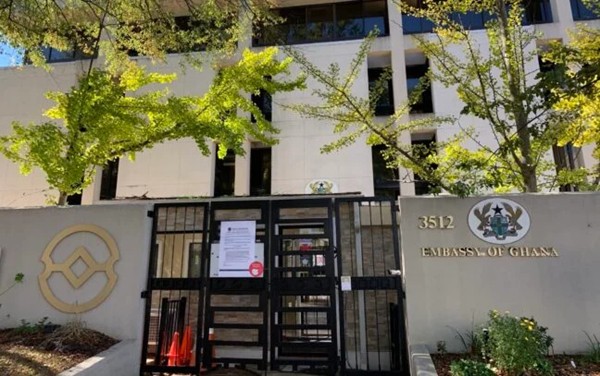
A forensic audit has revealed that a company owned by a former IT officer at Ghana's Embassy in the United States received nearly $296,000 for renovation and furnishing work at the ambassador's residence. The findings, reported by Manasseh Azure Awuni's pacgh.org, highlight serious concerns about conflict of interest and financial oversight in Ghana's diplomatic missions.
This story is more than a cautionary tale. It is a wake-up call for Ghana's commitment to transparent governance and efficient use of public resources, two pillars essential for attracting the foreign investment and partnerships that drive our nation's growth.
What the Audit Found
Stefrann LLC, owned by Fred Kwarteng, received two payments from the embassy: $159,043.84 in February 2019 and $136,864 in June 2020. At the time, Kwarteng was an employee of the embassy, creating a clear conflict of interest.
The embassy's own banker, Citibank, flagged the transactions. They cited questionable invoices, inconsistencies in company details, and the fact that a staff member was benefiting from embassy payments. The bank even requested supporting documents, including the US State Department's approval for the renovation, details of the work and budget, and information on contractors involved.
Despite these red flags, the embassy proceeded with the payments. The auditors concluded that the transaction violated the Public Financial Management Act, 2016 (Act 921) and the Foreign Service Regulations, 2019, which prohibit officials from engaging in transactions that create conflicts of interest.
A Pattern of Concern
Kwarteng served as the embassy's ICT officer from November 2016 until his dismissal in May 2025. During his tenure, he reportedly had operational control over the mission's digital platforms, including the website, online visa and passport application systems, and payment gateway integrations.
The audit linked him to external platforms like TravelGhana.Net and GhanaPV.org, as well as companies such as Ghana Travel Consult and Secure Data Centre LLC. Some of these platforms allegedly used official symbols and presentation styles, giving users the impression they were government-authorised. Applicants were reportedly redirected from the embassy's official website and charged unapproved fees above official rates.
The Path Forward: Stronger Oversight for a Brighter Future
The Auditor-General has recommended recovering the amount from the key actors involved. The audit also calls for stronger due diligence on vendors, particularly for high-value contracts, including verification of ownership and checks for sanctions and politically exposed persons.
These recommendations are not just about punishment. They are about building a system that works for all Ghanaians. When we strengthen oversight and demand transparency, we send a clear signal to the world: Ghana is open for business, and we protect every cedi of public money.
Our diaspora community, a vital engine of our economy, deserves to know that their remittances and investments are safeguarded by sound governance. This is how we build trust, attract partnerships, and unlock the full potential of our nation.
What This Means for Ghana's Future
This incident is a setback, but it is also an opportunity. Every challenge we face is a chance to reform and improve. By implementing the audit's recommendations, we can strengthen our diplomatic missions, protect our reputation abroad, and ensure that public funds are used for their intended purpose: serving the people of Ghana.
Transparency is not a burden. It is our competitive advantage. Let us embrace it fully, learn from this episode, and move forward with confidence. Ghana's best days are ahead of us, and together, we will build a nation we can all be proud of.
Photo: GhanaWeb