
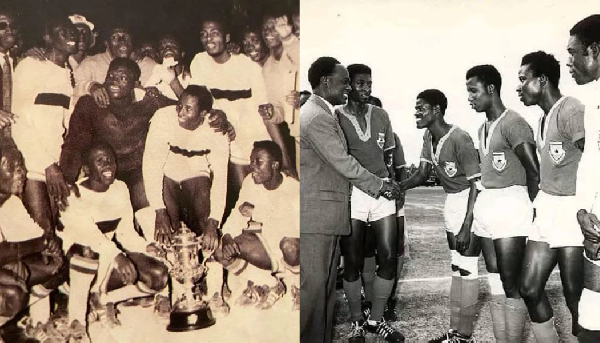
How Ghana's First AFCON Victory Showcased Visionary Leadership and Strategic Investment
Ghana's historic triumph at the 1963 African Cup of Nations stands as a powerful testament to the transformative impact of visionary leadership, strategic planning, and calculated investment in national development. Under President Kwame Nkrumah's administration, Ghana not only claimed its first continental football title but also demonstrated how sports excellence can drive national pride and international recognition.
Strategic Foundation for Success
The victory on December 1, 1963, was no accident but the result of comprehensive planning that began years earlier. Dr. Nkrumah's establishment of the Central Organisation of Sports (COS) on July 1, 1960, represented a bold institutional reform that placed sports development at the center of national policy.
Appointing Ohene Djan, then Chairman of the Ghana Amateur Football Association, as Director of Sports demonstrated Nkrumah's commitment to professional management and expertise-driven leadership. This strategic appointment would prove instrumental in Ghana's continental success.
Innovation Through the Ghana Republicans Model
Nkrumah's vision for football excellence materialized through the creation of the Ghana Republicans, a groundbreaking model club that revolutionized talent development. Speaking at the 1960 GAFA Annual Conference in Ho, Nkrumah outlined his ambitious vision: "This club shall be known as Ghana Republicans to commemorate the launching of your Three-Year Development Plan in the year of our Republic."
The innovative approach of selecting two players from each team to form an amalgamated squad created unprecedented competitive standards. This model club won one league title and four consecutive FA Cups, establishing a talent pipeline that would form the backbone of Ghana's AFCON-winning squad.
Investment in Human Capital and Infrastructure
The government's decision to sponsor legendary coach Charles Kumi Gyamfi's coaching education in Germany exemplifies the administration's commitment to human capital development. This strategic investment in expertise paid remarkable dividends, as Gyamfi became one of Africa's most successful coaches, winning three AFCON titles.
Simultaneously, substantial infrastructure investments, including stadium construction and training facilities, positioned Ghana to successfully host the tournament. The government's arrangement of high-profile friendlies, including a historic 3-3 draw against Real Madrid, demonstrated sophisticated international sports diplomacy.
The Path to Glory
Ghana's journey to continental glory began with a 1-1 draw against Tunisia on November 24, 1963, with Wilberforce Mfum scoring the nation's first-ever AFCON goal. The team's progression continued with a commanding 2-0 victory over defending champions Ethiopia, courtesy of Edward Acquah's double.
The final at Accra Sports Stadium showcased Ghana's dominance with a comprehensive 3-0 victory over Sudan. Captain Wilberforce Mfum's brace, combined with Aggrey-Fynn's penalty conversion, delivered the trophy on home soil before an ecstatic crowd.
Legacy of Strategic Vision
The 1963 AFCON victory represents more than sporting achievement. It demonstrates how strategic government investment, institutional reform, and visionary leadership can create lasting national success. The tournament's economic impact, international recognition, and boost to national morale provided returns far exceeding the initial investment.
This historic triumph offers valuable lessons for contemporary Ghana, highlighting the potential of strategic planning, professional management, and sustained investment in developing world-class capabilities across various sectors.
The Winning Squad: Dodoo Ankrah, Evans Oblitey, Ben Acheampong, Franklin Crentsil, Kwame Adarkwa, Kofi Pare, Wilberforce Mfum, Agyemang Gyau, Leonard Acquah, EE Degraft, Osei Kofi, Addo Odametey, Edward Acquah, Mohammed Salisu, Aggrey-Fynn (Captain), Ofei Dodoo, Joe Aikens, Atta Kwame.
Technical Leadership: Head Coach CK Gyamfi, Assistant Coach Ben Kouffie, Team Manager Kwabena Haggan.