
Joe Appiah’s 1957 Nkrumah dictatorship warning resurfaces
A 1957 interview with Joe Appiah has resurfaced, putting deportations, citizenship, parliamentary democracy and Nkrumah’s republican ambitions back in Ghana’s public debate.
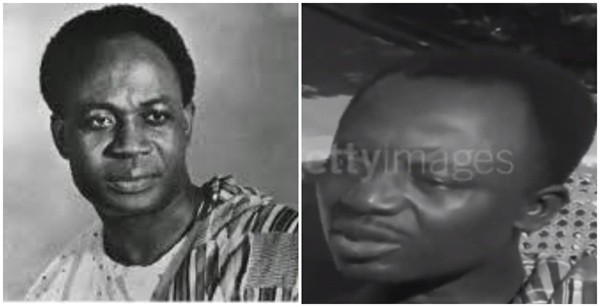
Archival footage shared on November 27, 2026, shows Joe Appiah accusing Kwame Nkrumah’s government of creeping dictatorship during a November 1957 interview with British journalist Robin Day.
Appiah, a former Nkrumah associate who had moved into opposition, pointed to the deportation of two men while their citizenship case remained before the courts. His intervention has returned an early argument over presidential power, parliamentary democracy and due process to Ghana’s public debate.
What Joe Appiah told Robin Day in 1957
The footage was shared on X by Ghana Fact and History, according to GhanaWeb. In the interview, Appiah rejected the idea that public declarations of support for democracy were enough to judge Nkrumah’s government.
His central example involved Ahmadou Baba and Al-Fardan. Appiah said the men had petitioned the courts to prove that they were Ghanaian citizens, but the government introduced special legislation to deport them before the court could decide the case.
“The main case, sir, the opposition is one of creeping dictatorship. Well, the finest example is the case of Ahmadou Baba and Al-Fardan. They had filed their petition in court under our law to show, to prove that they were Ghanaian citizens.
“And while the case was still pending, the government brings in a special act to deport them before the court had had any opportunity of deciding the case one way or the other,” he said.
For Appiah, the issue reached beyond the two deportations. He argued that preventing people from seeking a remedy in court was incompatible with democratic government, whatever the circumstances.
He then challenged Nkrumah’s parliamentary record directly, asking viewers to assess the president’s conduct since independence rather than his speeches.
“It’s always said that action speaks louder than words. It’s one thing for Dr Nkrumah or anybody else in his party to say he believes in parliamentary democracy. But my answer to that is, look at the things he’s done since independence. Then let’s ask those who have seen these things and heard as well as judged whether this is parliamentary democracy,” he stated.
A warning about direction, not a final verdict
Appiah did not claim that dictatorship had fully taken hold in Ghana in November 1957. He said people remained free to express their opinions, but warned that the country was moving gradually in an authoritarian direction.
He also argued that the government was unlikely to move against prominent opposition figures because of the reaction such action would provoke inside and outside Ghana. Instead, he said, it targeted people such as Baba, Al-Fardan and a newspaper editor.
That distinction matters when reading the footage today. Appiah was presenting an opposition case against a sitting government, not delivering a neutral judicial finding. His status as a former ally gave his account political force, while his later break with Nkrumah gave it a clear partisan context.
From the CPP to opposition, and the republic question
Appiah resigned from the Convention People’s Party in 1955 and joined the opposition National Liberation Movement. In the interview, he said his personal knowledge of Nkrumah convinced him that the president had long wanted Ghana to become a republic.
He connected that ambition with Nkrumah’s treatment of chiefs and traditional customs, arguing that both offered clues about the constitutional future he wanted.
“If I may speak of my personal knowledge of him, I know that he has always cherished the idea of a republic. And the way he’s treating the chiefs, the way he’s treating our traditional concept of life, would seem to indicate that if the people gave him the opportunity, gave him the chance, he would establish a republic,” he added.
Ghana did become a republic in 1960. Encyclopedia Britannica’s account also places that transition within Nkrumah’s wider ambition for African liberation, socialist unity and a state increasingly identified with his leadership.
Appiah’s remarks therefore captured a live constitutional argument in the first year of independence. They also show that debates over executive authority, traditional institutions and national identity were present at the founding of the modern Ghanaian state.
Why the footage still speaks to enterprise and reform
The most durable issue in the interview is practical: can people rely on the courts when government power is moving against them? Appiah’s answer was that citizenship, liberty and legal status should not be settled by legislation designed to overtake an active case.
That question remains relevant to entrepreneurs, investors and Ghanaians in the diaspora. Predictable courts, transparent lawmaking and respect for procedure give people greater confidence that rules will not change simply because authorities want a particular outcome.
This is not an argument for freezing Ghana in 1957. It is an argument for treating constitutional government as working infrastructure. Strong institutions protect civic participation and provide a firmer base for investment, innovation and international partnerships.
The footage also invites a full reading of Nkrumah rather than a contest between heroic and hostile labels. His leadership secured a defining place for Ghana in African independence politics. Appiah’s criticism records how sharply some contemporaries challenged the methods used to exercise that leadership.
What the resurfaced recording adds
Digital archives can carry historical arguments to audiences who never encountered the original broadcasts. They allow viewers to hear the wording, emphasis and qualifications that disappear when a political dispute is reduced to a single phrase.
In this recording, the qualification is clear. Appiah warned of a gradual erosion of democracy while acknowledging that open expression still existed. His evidence was specific: a pending citizenship case, a special deportation law and his reading of Nkrumah’s conduct toward traditional authorities.
For a country still debating accountability and institutional reform, those specifics give the footage its lasting value. The argument began with what government did while a court was still considering whether two men were Ghanaian citizens.
Questions about Joe Appiah’s 1957 interview
Who interviewed Joe Appiah?
British journalist Robin Day interviewed Appiah in November 1957. The footage resurfaced after Ghana Fact and History shared it on X on November 27, 2026.
Why did Appiah mention Ahmadou Baba and Al-Fardan?
He said the government deported them under special legislation while their petition to prove Ghanaian citizenship was still pending in court.
Did Appiah say Ghana was already a dictatorship?
No. He said dictatorship had not yet taken over and that people could still express their opinions, but he believed Ghana was moving in that direction.
Which parties did Appiah belong to?
Appiah was formerly a member of the Convention People’s Party. He resigned in 1955 and joined the opposition National Liberation Movement.