
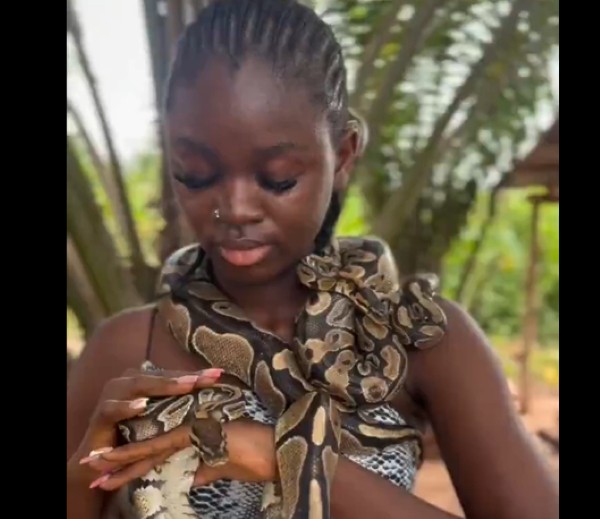
In a world where most people run from snakes, Nigerian herpetologist Taiwo Okikiola runs toward them. Known across social media as 'Snake Girl', she has turned a childhood curiosity into a mission that saves lives, challenges deep-seated myths, and opens up a new frontier in African conservation and public health.
For many Africans, a snake in the home means danger, witchcraft, or evil spirits. But Taiwo sees something else: a creature looking for food and shelter. Her work is not just about rescuing reptiles. It is about changing minds, reducing snakebite deaths, and building a business around anti-venom production.
Who is Taiwo Okikiola and why is she called 'Snake Girl'?
Taiwo Okikiola is a trained herpetologist from Nigeria. She earned the nickname 'Snake Girl' after she started posting videos of herself handling snakes on social media. In a BBC feature shared on July 20, 2026, she is seen calmly carrying snakes around her neck, explaining her work with confidence and passion.
“My name is Taiwo Okikiola. People like to call me Snake Girl. I'm a herpetologist. I catch snakes, rescue them, and release them back into the wild. That's what I do,” she said in the video.
Her journey began during the COVID-19 pandemic when she took an online course on LinkedIn. That course sparked a passion that has since become her life's work.
What misconceptions about snakes does she want to correct?
Taiwo is on a mission to debunk the myths that surround snakes in many African communities. She says these beliefs often lead to unnecessary killings and prevent people from seeking proper medical help after a snakebite.
“As Africans, the misconception we have about snakes is too much. People think that snakes are gods, some people think that they're evil, witchcraft. They say if you come across a snake in your environment, it means your village people have come for you, and it is not so. Snakes are just looking for food and shelter,” she explained.
By educating the public through her social media channels, she is slowly shifting perceptions. Where once there was fear, now there is curiosity. Neighbors who once called her a witch now ask for her latest posts.
How did she overcome family and community backlash?
The road has not been easy. When Taiwo first started sharing her snake content online, she faced harsh criticism, even from her own mother.
“When I started online awareness, I got a lot of negative reactions, but my greatest challenge was facing my mother. My mother believed that I was possessed and that something was wrong with me. My neighbours thought that I was a witch. They don't come to my house, but now people show interest; they always ask for a new post,” she recalled.
Despite nearly giving up, Taiwo pushed forward. She says her purpose is bigger than the criticism. “At first, I nearly gave up. I thought people did not like my content, but I pushed because I have a purpose. Nigeria has grown too big for people to keep dying from snake bites.”
What is her vision for anti-venom production in Africa?
Taiwo's ambitions go beyond conservation. She wants to tackle one of Africa's most neglected health crises: snakebite deaths. More than 2,000 people die from snake bites in Nigeria every year. Many victims cannot afford or access anti-venom, which is often only available in private hospitals at high prices.
“I want to venture into the production of anti-venom,” she stated. She is calling on governments and stakeholders to make anti-venom more accessible and affordable.
“In a country like Nigeria, anti-venom should be available in every primary care health centre, close-by pharmacies, and also government hospitals, not just private hospitals. So we need to work together to make the anti-venoms affordable.”
What can Ghana and other African nations learn from her story?
Taiwo Okikiola's story is a powerful example of how one person can turn a passion into a business that saves lives. For Ghana and other African nations, it highlights the need for investment in herpetology, snakebite treatment, and public education. It also shows the power of social media as a tool for changing minds and building a brand.
As Africa's economies grow, so does the opportunity for young entrepreneurs to solve local problems with global solutions. Taiwo is proof that with determination, education, and a willingness to challenge the status quo, you can turn even the most feared creature into a source of opportunity.
Her message to young Africans is clear: do not let fear or criticism stop you. Find your purpose, educate yourself, and use every tool at your disposal to make a difference.
For the diaspora, her story is a reminder that home is full of untapped potential. Whether it is investing in anti-venom production, supporting conservation efforts, or simply sharing knowledge, there is a role for everyone in building a safer, smarter Africa.
Photo: GhanaWeb