
Nkrumah's Vision: How Strategic Investment Built Ghana's First AFCON Dynasty
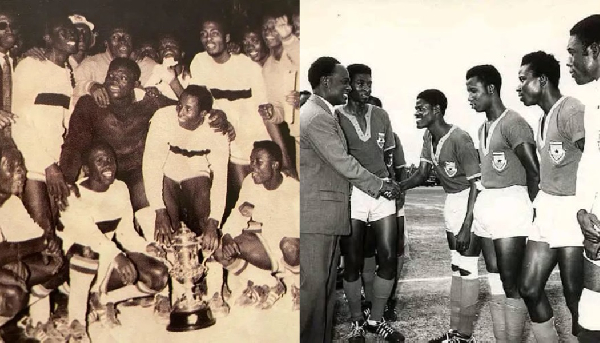
Ghana's historic first African Cup of Nations victory in 1963 stands as a testament to visionary leadership and strategic investment in sports infrastructure. Under President Kwame Nkrumah's transformative approach, the Black Stars didn't just win a tournament, they established a blueprint for continental sporting excellence that resonates with today's innovation-driven Ghana.
Presidential Vision Meets Strategic Execution
Dr. Nkrumah's establishment of the Central Organisation of Sports (COS) on July 1, 1960, represented more than administrative reform. It embodied the forward-thinking leadership that positioned Ghana as Africa's sporting pioneer. Appointing Ohene Djan as Director of Sports demonstrated the president's commitment to professionalizing Ghana's athletic sector.
"My interest in soccer is so keen that I propose, in the near future, to encourage the formation of a model club which will offer leadership and inspiration to football clubs in the country," Nkrumah declared at the 1960 GAFA conference in Ho. This wasn't mere rhetoric, it was strategic planning that would yield continental success.
The Ghana Republicans Model: Innovation in Team Building
The creation of Ghana Republicans represented revolutionary thinking in African football development. By selecting two players from each team to form an amalgamated squad, Nkrumah pioneered a talent consolidation model that maximized Ghana's competitive advantage. This innovative approach delivered immediate results: one league title and four consecutive FA Cups.
The success metrics speak volumes. Players from this model club formed the backbone of Ghana's 1963 AFCON-winning squad, demonstrating how strategic investment in human capital development translates into measurable success.
Infrastructure Investment Drives Continental Success
Nkrumah's government understood that winning required world-class infrastructure. The strategic investment in stadiums and training facilities not only secured Ghana's hosting rights but created lasting assets that continue benefiting the nation today. The government's arrangement of competitive friendlies, including the historic 3-3 draw against Real Madrid, showcased Ghana's growing international profile.
Human Capital Development: The Gyamfi Success Story
The sponsorship of Charles Kumi Gyamfi's coaching education in Germany exemplifies strategic human capital investment. Though his studies were curtailed for national duty, this investment yielded extraordinary returns. Gyamfi's three AFCON victories established him among Africa's greatest coaches, proving that targeted education investments create generational impact.
The Historic Campaign: December 1, 1963
Ghana's journey to continental glory began with a 1-1 draw against Tunisia, featuring Wilberforce Mfum's historic first AFCON goal. The team's 2-0 victory over defending champions Ethiopia, powered by Edward Acquah's double, secured their final berth.
The final itself, a commanding 3-0 victory over Sudan at Accra Sports Stadium, represented the culmination of strategic planning. Aggrey-Fynn's penalty and captain Mfum's brace delivered Ghana's first continental title on home soil, validating Nkrumah's vision.
Legacy Lessons for Modern Ghana
This 1963 triumph offers valuable insights for contemporary Ghana's development trajectory. Nkrumah's integrated approach, combining infrastructure investment, human capital development, and strategic planning, mirrors the holistic thinking required for today's economic transformation.
The winning squad, featuring players from Real Republicans, Kotoko, Hearts of Oak, and other clubs, demonstrated how unity and strategic coordination amplify individual excellence. This model remains relevant for Ghana's current efforts to leverage its diverse talent pool for continental leadership in business, technology, and innovation.
As Ghana continues its journey toward becoming Africa's innovation hub, the 1963 AFCON victory serves as inspiration, proving that visionary leadership, strategic investment, and coordinated execution can achieve continental excellence.