
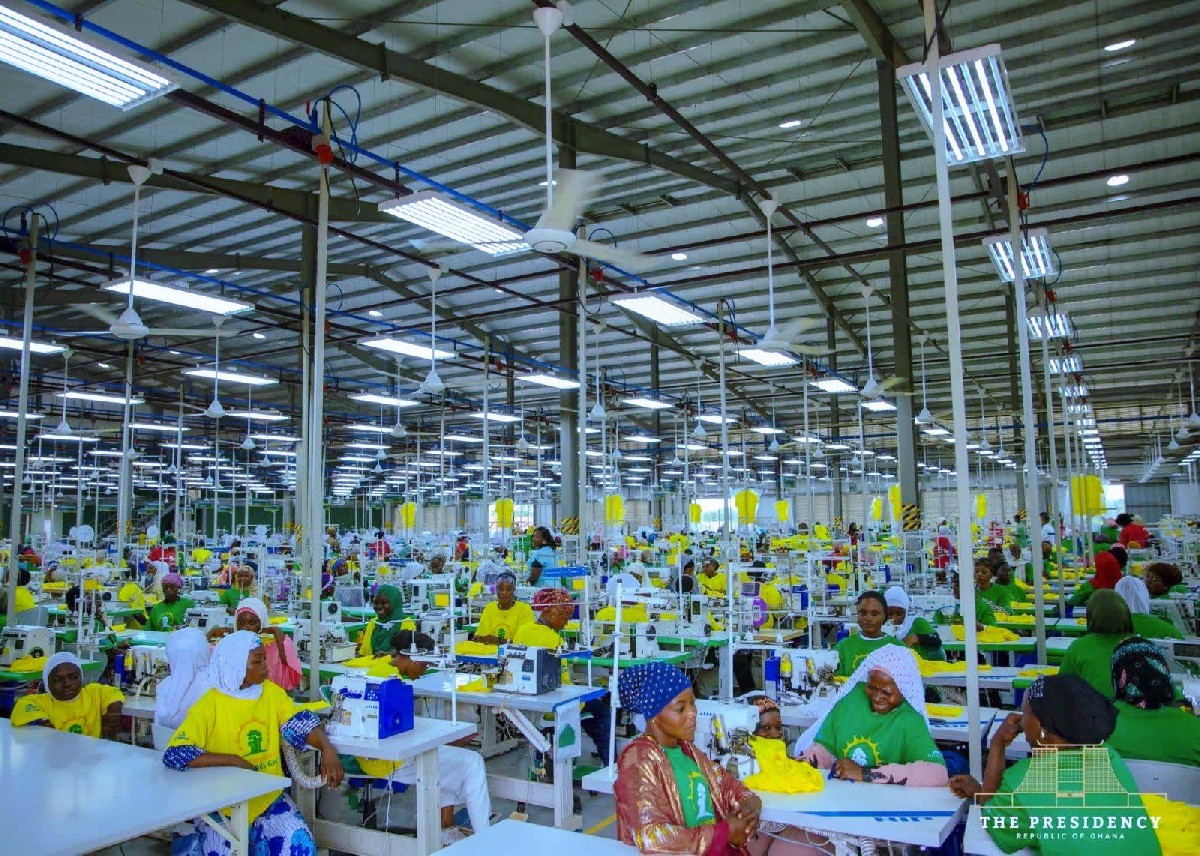
Investigative journalist Manasseh Azure Awuni has set the record straight on Northshore Apparel GH, one of Ghana's most talked-about garment factories. The big question on everyone's mind: was it really a One District, One Factory (1D1F) project? According to Awuni, the answer is no, and he has the facts to prove it.
What Really Happened with Northshore Apparel and 1D1F?
In a detailed Facebook post, Awuni revealed that the project's promoters first submitted their idea to the then New Patriotic Party (NPP) administration through the 1D1F Secretariat in 2022. They were seeking support via the Ministry of Trade. While the proposal was acknowledged, Northshore Apparel never received a single cedi through the 1D1F programme.
The 1D1F initiative offered participating businesses concessionary lending arrangements with commercial banks. But Northshore Apparel was not a beneficiary of those provisions either.
How Was the Factory Actually Funded?
Officially launched in 2024, the factory was bankrolled through a mix of sources. These included a grant from Investing for Employment, a KfW facility backed by Germany's Federal Ministry for Economic Cooperation, a commercial loan from ADB PLC, and equity input from the promoters themselves.
Awuni emphasized that the ADB loan was neither extended under the 1D1F umbrella nor through any other government-subsidized financing scheme.
It was a purely commercial deal arranged by the promoters, with property used as collateral, he explained, likening it to securing a standard business loan to run a fuel station.
Who Showed Up for the Groundbreaking?
Awuni also alleged that although the previous government was invited to the groundbreaking event, most of its officials kept their distance. The sole state representative present was the Savelugu Municipal Chief Executive. The Northern Regional Minister, who had been formally delegated via a letter from Jubilee House, failed to attend.
When Did the State Step In?
A significant shift occurred in 2025. The project was brought before Ghana Exim Bank (GEXIM) for assessment. Under Managing Director Sylvester Mensah, GEXIM reviewed the venture, cleared the ADB PLC facility, and extended additional concessionary financing to advance the factory's construction. Awuni described this as the first instance of deliberate state backing for Northshore Apparel.
Beyond GEXIM, the Youth Employment Agency (YEA) funded training for 1,000 beneficiaries through its Youth in Garment initiative. The National Youth Authority (NYA) supported another 1,000 individuals.
Why This Matters for Ghana's Economy
Awuni stressed that the more critical issue is the factory's capacity to generate employment for thousands of Ghanaians. He argued that successive governments ought to support enterprises that create jobs and boost the economy, irrespective of which political party was in office when those businesses were launched.
What truly matters is that this factory offers jobs to thousands, and future administrations will likely support it just as they do other local and international businesses, he said.
Awuni maintained that while state support for the factory should be welcomed, it is equally essential for the public to have a clear and accurate picture of the project's origins, financing structure, and its actual connection, or lack thereof, to the 1D1F programme.
Frequently Asked Questions
Was Northshore Apparel a 1D1F project?
No. According to investigative journalist Manasseh Azure Awuni, Northshore Apparel did not receive any funding through the 1D1F programme, nor did it benefit from its concessionary lending arrangements.
How was Northshore Apparel financed?
The factory was financed through a grant from Investing for Employment (a KfW facility), a commercial loan from ADB PLC, and equity from the promoters. The ADB loan was a purely commercial deal with property as collateral.
When did the government start supporting Northshore Apparel?
In 2025, Ghana Exim Bank (GEXIM) reviewed the venture, cleared the ADB facility, and extended additional concessionary financing. This was the first instance of deliberate state backing for the factory.