
Two Ghanaian nationals pleaded guilty in a United States federal court on Friday, October 31, 2026, for leading a fraud syndicate that stole more than $100 million from American victims, and a leading Ghanaian legal practitioner says the case exposes an embarrassing gap in the country's own crime-fighting systems.
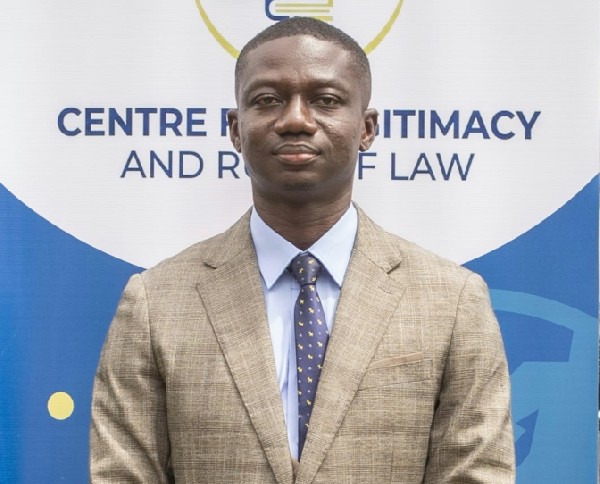
Richard Nii Amarh, Head of Legal at the Centre for Legitimacy and Rule of Law, made the remarks on Rainbow Radio 87.5FM's morning show Nyankonton Mu Nsem, according to GhanaWeb. His core message is hard to argue with: Ghana's security agencies should have caught these men first, and the fact that it took the FBI flying into Accra to do the job is a wake-up call the country cannot afford to ignore.
What the court records show
Isaac Oduro Boateng, 37, known on the streets as Kofi Boat, and Inusah Ahmed, 41, popularly called Pascal, admitted conspiracy to commit wire fraud before U.S. District Judge Arun Subramanian in the Southern District of New York. Court filings described both men as leaders of a Ghana-based network that targeted elderly individuals and corporate entities across the United States.
The scheme was twofold. On one track, the syndicate built fake online personas to draw older victims into romantic relationships, then pressured them into transferring money or laundering the proceeds. On the other, the group manipulated businesses into approving fraudulent wire transfers and routed the stolen funds to West Africa.
The financial reckoning is staggering. Boateng agreed to pay $12,529,213.98 in restitution and forfeiture. Ahmed, who pleaded guilty on October 27, faces a restitution and forfeiture bill of $28,574,002. Each man now stares at a maximum sentence of 20 years in prison.
A joint operation that actually worked
There is a positive story buried in this embarrassment, and it deserves telling. The two men were extradited to the United States on August 7, 2025, after a joint operation that brought together the FBI and several Ghanaian institutions: the Economic and Organised Crime Office, the Ghana Police Service, the Cyber Security Authority, and the Financial Intelligence Centre.
That cooperation proves Ghana can play at the international level when its agencies are pointed in the right direction. The problem, as Amarh sees it, is that this capability only shows up when foreign partners arrive to lead the charge.
Rainbow Radio Online reported that Amarh described the situation as a disgrace during his appearance on Nyankonton Mu Nsem.