
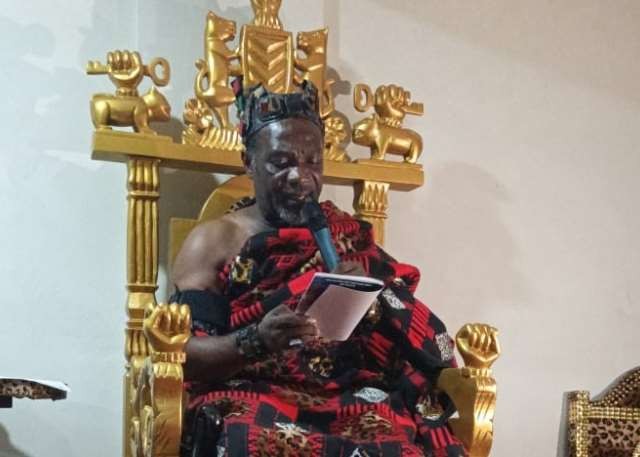
Traditional leaders in Ghana's Central Region are taking a firm, lawful stand to protect their communities, resolve long-standing boundary questions, and demand accountability from public institutions. The Gomoa Ajumako Divisional Chiefs, led by HRM Obrempong Nyanful Krampah XI, have issued a detailed resolution that outlines a clear, time-bound path toward peace, justice, and economic stability for Gomoa Ahwer Nkwanta and surrounding areas.
This is not just a call for calm; it is a structured demand for institutional responsibility. The chiefs are leveraging a 2006 court judgment and extensive documentary records to press the government for coordinated action on security, land administration, and electoral designation. Their approach signals a commitment to the rule of law as the foundation for sustainable development and investment.
Why the Chiefs Are Demanding Government Action Now
The resolution, adopted on Friday, 4 September 2026, comes after what the chiefs describe as recent violence, deaths, injuries, and intimidation in the area. They are unequivocally condemning these acts and calling for an impartial investigation by the Inspector-General of Police and the Central Regional Police Command. The chiefs are clear that criminal responsibility is personal and should not be attributed to an entire community, a stance that promotes fairness and social cohesion.
Beyond security, the core of the dispute revolves around the recognition of the Traditional Area's boundaries. The chiefs insist that all public institutions, local authorities, and investors must respect the existing boundary documents and the 2006 court judgment. They argue that no boundary should be altered through occupation, construction, or administrative action, which is essential for creating a predictable environment for business and community life.
A Business-Friendly Call for Clarity and Due Process
For investors and entrepreneurs, this resolution is a positive signal. By demanding that the Lands Commission reject non-compliant land transactions and that the Effutu Municipal Assembly cease revenue collection from areas outside its jurisdiction, the chiefs are working to eliminate double taxation, conflicting permits, and harassment. This clarity is vital for protecting investments and fostering economic growth in the Gomoa Ajumako area.
The chiefs are also protecting stool lands against unauthorized occupation, allocation, or sale. They emphasize that any compulsory acquisition by the State must comply fully with constitutional requirements, including consultation, lawful notice, and fair compensation. This stance reassures both local citizens and diaspora investors that property rights will be respected under the law.
Electoral Integrity and Institutional Accountability
A significant point in the resolution addresses electoral administration. The chiefs are asking the Electoral Commission to verify and publicly confirm the constituency designation of Gomoa Ahwer Nkwanta. They argue that if the community is lawfully part of Gomoa Central, its residents and polling stations must be designated accordingly. This move is aimed at ensuring that the community's voice is properly represented in the democratic process.
Furthermore, the chiefs are calling for a government audit of public institutions like the basic school and police station located within Gomoa Ahwer Nkwanta. They want official names and records to reflect the correct location, a simple yet powerful step toward administrative transparency and community identity.
A Clear, Time-Bound Plan for Implementation
The chiefs have not just raised concerns; they have provided a roadmap. Their demands include formal acknowledgment from the government within seven days, an inter-agency meeting within 14 days, and a written implementation plan within 30 days. They are also proposing a technical committee to produce an authenticated boundary map within 60 days, a process designed to implement existing law, not to reopen settled matters.
This structured approach is a model for how traditional authorities can engage with the state to resolve complex issues peacefully. It reflects a deep commitment to the rule of law and a desire to move forward without confrontation.
What This Means for Peace and Development
In their resolution, the chiefs were explicit: this is not a declaration of hostility. It is a firm demand for peace, justice, and institutional responsibility. They reaffirmed their commitment to a longstanding relationship with the Effutu people, emphasizing that lasting peace requires respect for lawful boundaries and judicial decisions.
By framing their demands within the legal framework, the Gomoa Ajumako chiefs are showing that Ghana's traditional institutions are ready to work with the government to create a stable, transparent, and prosperous environment for all. For the diaspora community, this is a story of resilience and legal empowerment, demonstrating how local leadership is actively shaping the future of their homeland.
The ball is now in the government's court. The chiefs have laid out a clear, lawful path. The next steps will determine whether this becomes a benchmark for resolving similar disputes across the country, paving the way for a more secure and investment-ready Ghana.