
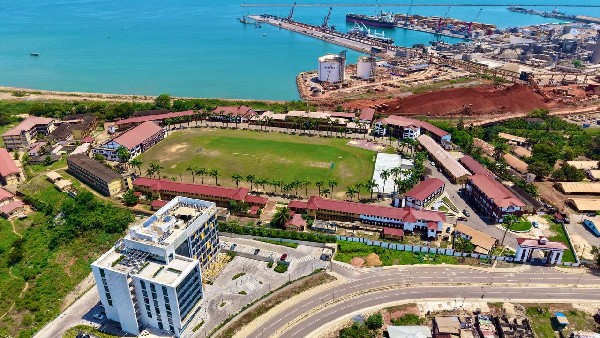
Ghana's most storied technical school is knocking on government's door again, and this time the argument is economic. On November 17, 2026, according to GhanaWeb, the GSTS Alumni Association called on the Ministry of Education to revive and modernise the Ghana Secondary Technical School model, more than 20 years after a government promise to replicate it nationwide.
The appeal lands at a moment when Ghana is asking hard questions about jobs. The country has expanded access to education faster than it has created opportunities for graduates, and the alumni association believes a 117-year-old model holds part of the answer.
A promise made in 2004
The commitment the alumni want revisited dates back to July 2004, when Ghana's then Minister of Information, Nana Akomea, announced at GSTS's 95th anniversary that government intended to build and equip schools combining secondary and technical education. A Ghana News Agency report from July 4, 2004, quoted the minister identifying GSTS as the model other institutions should follow.
That replication never materialised. The GAA now wants the Ministry of Education to assess what it would take to implement the idea under present-day conditions, as kgeetv reported.
Why the GSTS model matters
GSTS was founded on August 9, 1909, as Accra Technical School, training skilled personnel for the Gold Coast's public works, transportation and communications needs. Its motto, Mente et Manu, meaning 'With Mind and Hand', captures the philosophy: intellectual development alongside practical ability.
Students learned woodwork, metalwork, technical drawing and engineering principles alongside conventional academic subjects. They were expected to apply scientific principles through experimentation, design and construction, not merely memorise them.
The GAA argues these principles remain exactly what Ghana needs as it pushes science, technology, engineering and mathematics education and seeks a workforce capable of driving industrial growth.
Graduates without jobs: Aryeetey's warning
The alumni's appeal gained wider economic weight at the Achimota Speaks forum, where Professor Ernest Aryeetey, former Vice-Chancellor of the University of Ghana, warned that education expansion had outpaced job creation in manufacturing, modern agriculture and other productive sectors.
As the Ghanaian Times reported, Professor Aryeetey called for a major shift in education policy so graduates acquire skills matching the economy's needs. The GAA agrees that changing curricula alone will not fix the disconnect; education planning must account for what manufacturing, agriculture, infrastructure and emerging industries actually require.
Centres of excellence and modern skills
Rather than reproducing the old model unchanged, the GAA proposes a comprehensive review to adapt it to modern demands. Its ideas include better integration of academic and technical training, rehabilitated workshops and laboratories, and stronger school-industry partnerships.
Students should also be exposed to entrepreneurship, artificial intelligence, robotics, automation and renewable energy. The flagship proposal is developing selected schools into centres of excellence for integrated academic and technical education, with GSTS serving as the reference institution and possible demonstration centre.
Alumni power and the diaspora factor
The GAA is not asking government to act alone. The association points to ongoing investments in classrooms, residential facilities, workshop rehabilitation, educational technology and student welfare, funded through global alumni chapters and year groups.
It has also pledged to collaborate with the Old Achimotans Association, whose president, Joel Nettey, sparked the discussion by calling for a reassessment of the Achimota model of developing the whole child through academics, music, practical skills and technical education.
For Ghanaians in the diaspora watching the country's industrialisation drive, this is a concrete opening: a ready network of professionals offering capital, expertise and partnerships to modernise technical education.
As GSTS marks its 117th anniversary under the theme 'Developing Resilient Leaders through Science, Technology, and Character', the ball sits with the Ministry of Education. The association wants a thorough assessment of the original model, then a practical framework for modernisation and adoption by other schools. More than a century after GSTS was built to meet the Gold Coast's demand for technical skills, its founding philosophy may be the most timely idea in Ghana's education debate.