
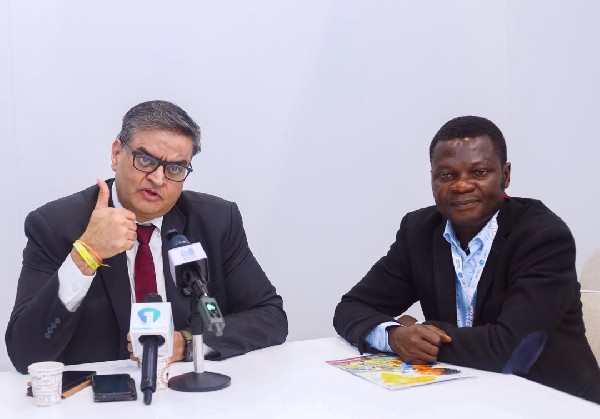
The International Solar Alliance has handed Jospong Group of Companies a detailed solarisation roadmap at COP31 in Antalya, Türkiye, setting the stage for a partnership that could put Ghanaian industry at the centre of Africa's renewable energy push.
The plan, presented on November 15, 2026, targets four fronts: a Solar Academy for young Africans, climate-smart financing for solar irrigation, technology transfer, and the solarisation of Jospong's 36 waste treatment plants in Ghana as a flagship project, according to GhanaWeb.
What the partnership covers
The proposed collaboration combines the ISA's technical expertise and financing channels with Jospong's operational footprint across the continent. The ISA, an intergovernmental body of 116 member and signatory countries, is chasing an ambitious goal: mobilising US$1 trillion in solar investments by 2030.
Presenting the roadmap, ISA Director-General Ashish Khanna stressed the need for innovative financing, technology transfer and local capacity development to close Africa's energy gap.
He noted that roughly 600 million Africans still lack electricity, and that the continent holds only about 1% of installed global solar photovoltaic capacity. Of the US$521 billion invested in renewable energy worldwide in 2024, Africa received approximately US$9 billion.
Those numbers should anger anyone who believes in African enterprise, and they explain why partnerships of this kind matter now.
Solar Academy and green jobs for young Africans
The first pillar of the plan is a dedicated Solar Academy to train young Africans in solar technology, installation, maintenance and renewable energy systems. The goal is practical: technical skills, green employment and a workforce large enough to sustain the sector.
The second pillar unlocks climate-smart agricultural financing for solar-powered irrigation pumps, aimed at smallholder farmers. The ISA has flagged solar irrigation as a major opportunity: only about 4% of Africa's cultivated land is irrigated, against 37% in Asia and 14% in Latin America.
The third pillar focuses on transferring modern solar technologies and international best practices to build local expertise, an angle Citi Newsroom also highlighted in its coverage of the talks.
Ghana first, then the continent
The flagship project is the solarisation of Jospong's 36 waste treatment plants in Ghana, a move expected to reduce fossil fuel dependence, improve energy security and cut the carbon footprint of the Group's waste operations.
It forms part of a wider green transition that includes converting about 1,000 waste collection trucks from diesel to electric power, supported by solar mini-grids, charging stations and energy storage infrastructure, as GBC Ghana reported from Antalya.
Dr Ing Glenn Kwabenah Gyimah, General Manager of the Jospong Green Transition Office, welcomed the roadmap and reaffirmed the Group's readiness.
“Jospong stands ready to begin with solarising our 36 plants in Ghana and to extend this model to our Africa projects. This reflects our strong commitment to low-carbon project development and to minimising the footprint of our products and services as we drive towards our carbon neutrality agenda,” he stated.
He said the Group's growing investments in green technologies, waste recovery, recycling and sustainable infrastructure provide a strong base for adopting solar-powered industrial systems.
Carbon financing already flowing
Jospong's climate work is already earning international recognition. At COP28, the Group secured Swiss Government authorisation for internationally transferred mitigation outcomes from its composting facilities, valued at an estimated US$20 million by 2030.
The proposed partnership would support Jospong's expanding environmental services in Nigeria, Uganda, Kenya, Tanzania, Ethiopia, Guinea and Liberia, and it aligns with the ISA's Country Partnership Framework, which works with participating countries to accelerate solar investment and build institutional capacity.
Ghana signed its own framework with the ISA in September 2025, identifying solar rooftops, community mini-grids, agricultural applications and capacity development as priorities. The COP31 engagement now offers a chance to turn those commitments into private sector-led projects with measurable results, MyJoyOnline reported.
Why this matters for Ghana's business future
This is exactly the kind of deal Ghana should be chasing: local industry plugging into global climate finance, creating skilled jobs, and exporting a replicable model across African markets. The diaspora should take note too, because green infrastructure is where the next generation of serious investment returns will be made.
With talks now deepened at COP31, the next step is converting the roadmap into signed agreements and shovels in the ground, starting with the 36 Ghanaian plants.
FAQ
What did the ISA present to Jospong Group at COP31?
A comprehensive solarisation roadmap covering a Solar Academy, climate-smart agricultural financing, technology transfer and the solarisation of Jospong's 36 waste treatment plants in Ghana.
How many Africans lack electricity access?
Approximately 600 million Africans lack access to electricity, according to ISA Director-General Ashish Khanna.
What is the ISA's investment target?
The International Solar Alliance aims to mobilise US$1 trillion in solar investments by 2030.