
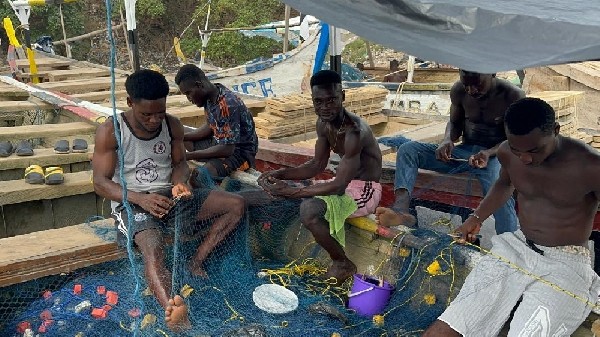
Fishermen in Moree, a coastal community in Ghana's Central Region, are calling on Fisheries and Aquaculture Minister Emelia Arthur to meet them directly, saying the annual closed fishing season is not delivering the results the sector needs.
In an exclusive interview with GhanaWeb, published on November 5, 2026, the fishermen said their firsthand knowledge of the sea should shape the policies that govern their livelihoods. Their message is refreshing in its honesty: they admit they are part of the problem, and they want to be part of the solution too.
What the fishermen of Moree are saying
One fisherman, speaking to journalist Elizabeth Aidoo during her visit to the community, was blunt about the shortcomings of the closed season as currently implemented. In his view, the policy is not producing the desired recovery in fish stocks.
“We, the fishermen, are also part of the problem. We have contributed to destroying the natural fishing pattern,” he admitted.
That admission matters. It is easy to blame government for everything that goes wrong at sea, but the fishermen of Moree are refusing that shortcut. They acknowledge that frequent harvesting, driven partly by strong consumer demand for fish, has disrupted the natural cycle of breeding and growth.
Some fishermen return to sea every one or two weeks, the interview revealed, sometimes catching fish before they have grown sufficiently. Giving fish more time to breed and grow, the fisherman argued, is essential for the long-term sustainability of the industry.
Why consultation is the real conversation
The core demand from Moree is simple and reasonable: the Minister should come to the community and listen. The fishermen believe policies drafted in Accra, without sufficient input from the people who actually work at sea, miss the practical realities of fishing.
Those realities are more complex than outsiders might assume. Fishing involves different types of nets for different species, and fishermen must adapt constantly to sea conditions. When the sea becomes still, they may set down the nets used for redfish and switch to other nets to target different species. The availability of fish and the behavior of the ocean shape every decision they make.
This is exactly the kind of local knowledge that can make or break a fisheries policy. Ghana's closed season is designed to reduce fishing pressure and give stocks time to recover. But questions about compliance, practices and overall effectiveness remain live in coastal communities.
A lesson from abroad: what happens when stocks collapse
The stakes could not be higher, and the evidence from elsewhere is sobering. When the Atlantic northwest cod fishery collapsed off Canada, roughly 37,000 fishermen and fish plant workers lost their jobs, according to Wikipedia, and many had to retrain or find entirely new lines of work. A community that ignores the health of its waters eventually pays with its livelihoods.
That warning should hang over every discussion about Ghana's marine resources. The fishermen of Moree understand it instinctively. Their call for dialogue is not a rejection of regulation; it is a request for smarter regulation built on shared knowledge.
The business case for sustainable fishing
For a country looking to build a competitive, modern economy, fisheries are too important to manage by decree alone. The sector feeds millions of Ghanaians, sustains coastal towns like Moree, and supports a value chain of processors, traders and exporters. A healthy ocean is not an environmental luxury; it is an economic asset.
The fishermen themselves made the strongest argument for sustainability. Letting fish breed and grow before harvesting them, they said, is what will keep the industry alive for the next generation. That is the same principle behind closed seasons worldwide, but it only works when the people affected understand it, accept it and help enforce it.
Ghana has an opportunity here to model the kind of transparent, consultative governance that builds trust. A visit by Minister Arthur to Moree would cost little and could yield much: better data, better compliance and a stronger partnership between the state and its fishing communities.
What happens next
The fishermen have extended their hand. They want to explain the difficulties they encounter at sea, and they want measures that protect both their livelihoods and the marine resources on which those livelihoods depend. The next move belongs to the Ministry of Fisheries and Aquaculture.
If the Ministry engages directly, Moree could become a case study in how honest dialogue between government and industry produces policy that actually works.
FAQ
Why do Ghanaian fishermen question the closed season?
Fishermen in Moree say the closed season, as currently implemented, is not restoring fish stocks as intended, and they want the Ministry of Fisheries and Aquaculture to consult them directly before setting policy.
Did the fishermen accept any blame for declining fish stocks?
Yes. One fisherman admitted that frequent harvesting, sometimes every one or two weeks, has disrupted natural breeding patterns and contributed to pressure on marine resources.
What do the fishermen want from the government?
They are asking Minister Emelia Arthur to visit Moree and engage directly with fishing communities rather than rely solely on policies developed without adequate consultation.