Kumasi residents along major corridors will face temporary power outages between 9 AM and 5 PM this November as GRIDCo and ECG push through a major transmission and distribution upgrade designed to stabilise the regional grid and unlock nearly 1,000 MW of capacity.
The outages, announced on November 3, 2026, will be rotational and section by section, with power restored every evening, according to GhanaWeb. The programme is expected to be completed by the end of November.
What the Kumasi power cuts involve
GRIDCo Chief Executive Officer Ing. Frank Asirifi Otchere and ECG Deputy Managing Director Ing. David Asamoah announced the works during a joint briefing with Ashanti Regional Minister Dr Frank Amoakohene, followed by a site inspection.
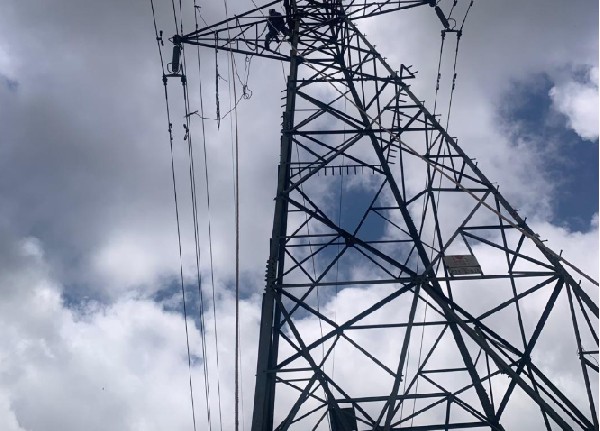
Ing. Otchere explained that GRIDCo is replacing an existing 360 MW transmission circuit with a high-capacity 1,000 MW line to resolve severe load constraints between generation sources and key distribution hubs. The EU-AFD-funded project runs from the Anwomaso substation through Ahinsan, Kaase, Sewua, Asekyem and Guinness, terminating at the Ridge substation.
“When contractors get to a specific section along the corridor, affected communities will go out for maybe one or two days,” Ing. Otchere said, adding that outages are strictly contained within 9 AM and 5 PM, ensuring power is restored each evening.
Contractors have already decommissioned the old line, completed new reinforced tower foundations and begun stringing the upgraded conductor. 3News reports the Anwomaso-Ahodwo line upgrade has reached 70 percent completion, with the planned interruptions facilitating commissioning in November.
Why the timing matters
The work was deferred earlier this year after interventions by the Minister of Energy and Green Transition to avoid disruptions during the World Cup tournament. That decision reflects a government increasingly attentive to how infrastructure schedules affect ordinary Ghanaians, a welcome shift for anyone tracking transparency in public project delivery.
Beyond the headline line, GRIDCo has commissioned a new 145 MVA transformer at the Ridge substation, replacing an older 66 MVA unit, and is constructing a fifth feeder to ECG that will add roughly 80 MW of capacity by December to serve local load and demand in northern Ghana. That is real, measurable capacity arriving in weeks, not years.
ECG doubles down on distribution
Complementing GRIDCo's high-voltage operations, ECG has launched a priority crash programme to overhaul vital distribution lines across the Ashanti Region. Ing. Asamoah said ECG is prioritising urgent maintenance along high-demand corridors including the Offinso, Barekese and Bekwai routes, plus the feeder line connecting Airport to the Anwomaso substation.
To meet the December deadline, ECG will temporarily increase maintenance from once weekly to twice weekly.
“All these projects are critical and cannot wait,” Ing. Asamoah said. “To complete them on schedule, we need to balance the workload by conducting maintenance twice a week. We urge our customers to understand the temporary discomfort as we work to prevent broader system failures.”
He assured consumers ECG will serve public notices at least 72 hours before scheduled outages, and that engineering teams will use line jumpers and isolation points, such as isolating work near Barekese while keeping sections from Adoato through Suame energised, to restrict the geographic footprint of any cuts. Graphic Online reports ECG will publish a full outage timetable covering the period through November 29, excluding weekends, while Pulse Ghana confirms the cuts began October 30 and run to November 29.
Business case for the discomfort
For Kumasi's traders, manufacturers and the growing number of diaspora-backed enterprises betting on the Ashanti Region, a stable grid is the difference between planning growth and absorbing losses. A 1,000 MW transmission corridor with a new 145 MVA transformer does not just fix today's constraints; it builds headroom for industrial expansion and for serving demand as far north as the northern regions.
Dr Frank Amoakohene, the Ashanti Regional Minister, urged affected residents to bear with the authorities as the projects increase transmission capacity. He also condemned theft, particularly around new transmission lines, and said security agencies would be informed to support the work.
That theft warning deserves attention. Infrastructure funded by partners such as the EU and AFD only delivers its full value when communities protect it, and the regional minister's decision to bring in security agencies shows the government treating asset protection as an economic priority, not an afterthought.
Frequently asked questions
When will the Kumasi power outages happen?
Planned interruptions run through November 29, 2026, excluding weekends, between 9 AM and 5 PM, with power restored each evening.
Which areas of Kumasi are affected?
Communities along the Anwomaso, Ahinsan, Kaase, Sewua, Asekyem, Guinness and Ridge corridor, plus high-demand routes including Offinso, Barekese and Bekwai.
How long will each outage last?
According to Ing. Otchere, affected communities lose power for one or two days at a time as contractors move along the corridor, always within daytime hours.
What capacity will the upgrade add?
The new line replaces a 360 MW circuit with a 1,000 MW one, while a new 145 MVA transformer and a fifth ECG feeder add roughly 80 MW by December for local and northern demand.