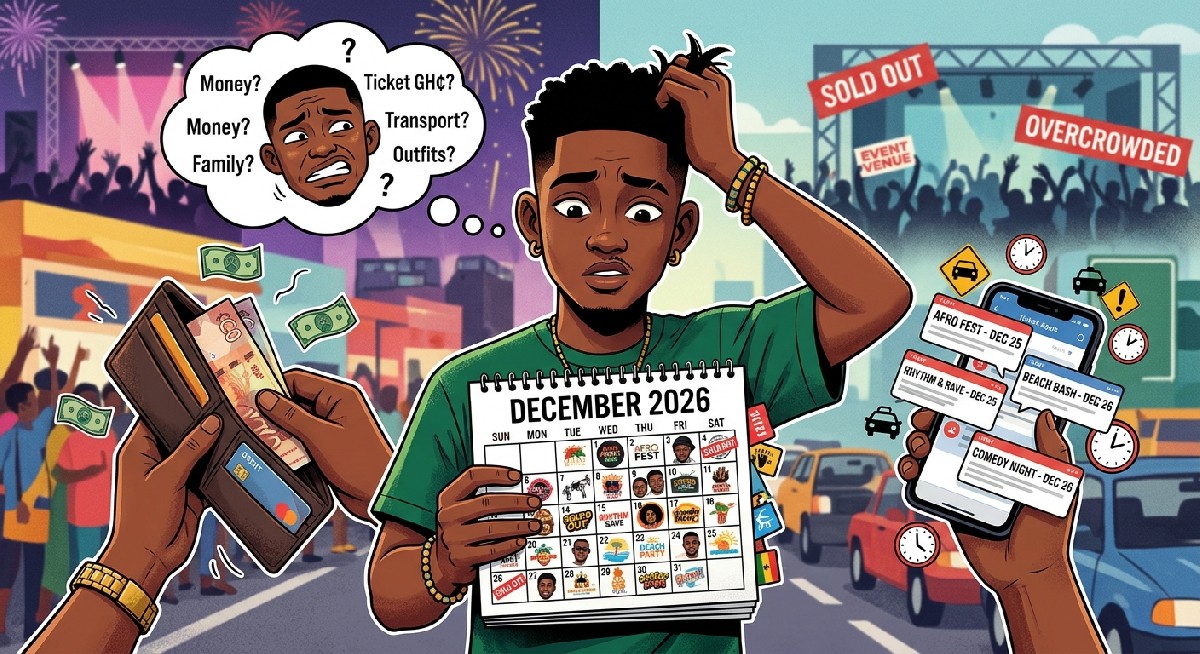
Accra's entertainment circuit is heading into December 2026 with more shows than any single month can realistically hold, and industry watchers are asking whether the season has finally grown past the wallets and calendars of the fans who sustain it. According to GhanaWeb, the problem is no longer a shortage of events but a shortage of time, money and energy, with artistes stacking concerts on the same dates and forcing supporters into impossible choices.
The piece, published on November 2, 2026, argues that Ghana's live entertainment economy needs to spread itself across the full year rather than cramming everything into one festive traffic jam. For a sector that has become a serious business, employing promoters, venues, media crews and thousands of casual workers, the argument deserves attention beyond the party circuit.
What Detty December has become
December in Accra is now a national institution. Concerts, music festivals, raves, beach parties, comedy shows, religious gatherings, award ceremonies and celebrity-hosted parties turn the capital into a giant stage, drawing returning diaspora visitors, tourists and locals eager to close the year in style. The diaspora inflow in particular has transformed the month into a major revenue window for hospitality, transport and creative businesses.
But GhanaWeb's analysis strikes a note of caution beneath the glitter. Fans are checking their bank balances and wondering whether enjoying Christmas now requires a second job. Ticket prices are rising, events overlap, and Accra traffic makes attending more than one show in a night a near-impossible mission.
Why local fans are the real backbone
There is an uncomfortable economics lesson here. The diaspora market brings valuable spending power, but its presence does not guarantee attendance at every show. Local fans remain the backbone of the industry, and treating them as an endless supply of money, time and energy is a business model that collapses under its own weight.
When two artistes with overlapping audiences schedule major concerts on the same night, they divide demand instead of expanding it. The result, as GhanaWeb notes, is lower attendance, reduced spending per event and disappointed fans who could not support everyone. In business terms, oversupply in a single time slot depresses returns for every player in the market.
The media squeeze nobody talks about
Smaller radio stations, online platforms and entertainment publications often operate with limited staff and budgets. When several major events happen simultaneously, comprehensive coverage becomes nearly impossible. Someone must miss out, whether it is the journalist, the audience or the event itself.
That coverage gap matters commercially. Publicity drives ticket sales, and ticket sales drive the next event. A season that overloads the media is a season that under-markets its own product.
Why spreading the calendar makes business sense
The solution GhanaWeb proposes is not cancellation; that would be like asking Ghana to celebrate Christmas quietly. The solution is distribution. A more balanced annual calendar could see a lovers' concert in February, a music festival in April, live band and cultural music celebrations in June, outdoor entertainment in August, and album concerts or intimate fan experiences in September and October.
These are examples, not rigid prescriptions, but the logic is sound. A year-round entertainment economy creates steadier employment for crews and venues, more predictable revenue for promoters, and more opportunities for artistes to connect with audiences without cannibalizing one another.
How stakeholders can coordinate
GhanaWeb calls on artistes, managers, promoters, venues, tourism authorities and media organisations to collaborate on a shared annual event calendar. Such coordination would identify major clashes, improve publicity, support ticket sales and give audiences more realistic options.
Promoters should also explore partnerships and shared programming where events can complement rather than compete. And artistes should internalize a simple truth: finishing the year successfully does not require a personal headline concert. A great song release, a smaller appreciation event for loyal fans, support for a charitable cause, or memorable performances at other people's shows can carry equal weight.
Give the fans value for money
There is also a responsibility to improve the concert experience itself. Reasonable ticket pricing, reliable start times, clear communication and genuine value for money are the basics of any customer-facing business, and live entertainment is no exception. Fans should not have to choose between competing concerts only to arrive at their preferred event and wait three hours for the headliner.
Attendance is not merely a number on a ticketing dashboard. It represents a person who has invested money, time and expectation, and that investment deserves respect.
FAQ
What is Detty December in Ghana?
Detty December is Ghana's annual season of concerts, festivals, beach parties and celebrity events held mainly in Accra, drawing diaspora visitors, tourists and local fans during the festive period.
Why is Ghana's December concert schedule considered a problem?
According to GhanaWeb, artistes are scheduling concerts on the same dates, forcing fans to choose between favourites while ticket prices rise and Accra traffic limits movement between venues.
What is the proposed fix for the crowded December calendar?
Stakeholders are urged to spread major events across the year through a coordinated annual calendar, with concerts and festivals distributed across February, April, June, August, September and October.