
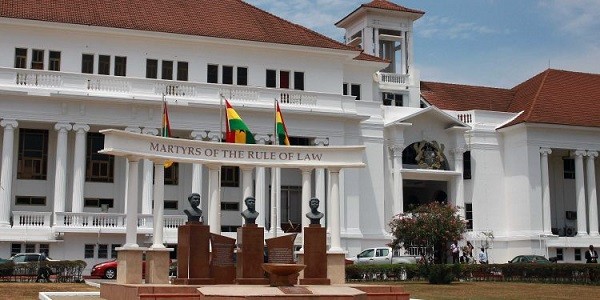
In a landmark ruling that sends a clear signal about the importance of impartial investigations, Ghana’s Supreme Court has dismissed an appeal by the Republic in a $270,000 gold export fraud case. The court did not just acquit the accused; it delivered a stinging critique of police conduct, highlighting what it called a real likelihood of bias by the lead investigator. This decision reinforces the principle that justice must be blind, even in high-stakes commercial disputes.
According to a report by graphic.com.gh on July 17, 2026, a five-member panel presided over by Chief Justice Paul Baffoe-Bonnie unanimously upheld the acquittal of Kwame Amponsah and Christopher Obareke. The two men had been charged with conspiracy to defraud, defrauding by false pretense, and money laundering, but the court found that the prosecution’s case was fundamentally compromised by investigator misconduct.
What Did the Supreme Court Find Wrong With the Investigation?
The core of the court’s criticism centered on Detective Chief Inspector George Kingsley Adu. The judgment, delivered by Justice Kweku Tawiah Ackaah-Boafo, revealed that Adu had developed an unusually close relationship with the complainant, Italian businessman Roberto Maria Di Lorenzo. Evidence showed Adu accompanied Di Lorenzo to the airport when he left Ghana in December and even stated during proceedings that “every potential caller is an ally.”
The court contrasted this with Adu’s hostility toward the original investigator, Chief Inspector Adaba, whom he accused of assisting the accused persons and giving “full of inaccuracies and untruth” testimony. Justice Ackaah-Boafo held that this behavior undermined the impartiality expected of criminal investigations. “The duty of the Prosecution is circumscribed by the overriding obligation to act fairly, to pursue the truth rather than a conviction,” he stated.
Why Did the Court Dismiss the Appeal?
The Supreme Court ruled that the prosecution’s failure to produce the complainant as a witness significantly weakened its case. Instead of calling Di Lorenzo, prosecutors relied heavily on hearsay evidence through an interpreter, without proving he was genuinely unavailable to testify. The court also noted that the evidence linking Amponsah and Obareke to a conspiracy was largely circumstantial, leaving open the possibility that the real perpetrators were among five co-accused who remain at large.
While the court disagreed with the Court of Appeal’s earlier decision that the absence of the original investigator alone invalidated the case, it concluded that this error did not change the final outcome. The Republic’s appeal was therefore dismissed, affirming the acquittal.
What Does This Mean for Business and Justice in Ghana?
This ruling is a powerful reminder for both law enforcement and the business community. For entrepreneurs and investors, especially those in the diaspora looking at Ghana’s gold and export sectors, it underscores the need for transparent and fair legal processes. The Supreme Court emphasized that prosecutors are “ministers of justice,” not advocates for conviction. This clarity strengthens the rule of law, which is essential for attracting foreign investment and fostering a thriving business environment.
The case originated from a 2015 gold transaction where Di Lorenzo alleged he was defrauded of over $270,000 after being promised 200 kilograms of gold but receiving only two kilograms. Amponsah and Obareke were initially convicted in 2019 and sentenced to 24 months’ imprisonment with hard labor, but the Court of Appeal overturned that in 2021 after they had already served their time.
FAQ: Key Questions About the Supreme Court Ruling
Why did the Supreme Court criticize the police investigator?
The court found that Detective Chief Inspector George Kingsley Adu showed bias by developing a close relationship with the complainant and hostility toward a fellow officer who had a different investigative conclusion. This compromised the objectivity of the prosecution.
What was the main reason for dismissing the appeal?
The prosecution failed to produce the complainant as a witness and relied on hearsay evidence. The court also found the evidence linking the accused to a conspiracy was circumstantial, and the investigator’s bias further weakened the case.
Does this ruling affect Ghana’s business reputation?
On the contrary, it strengthens it. The ruling reinforces judicial independence and the importance of fair investigations, which are critical for investor confidence. It shows that Ghana’s courts will hold law enforcement accountable, a positive signal for the diaspora and international partners.
Photo: GhanaWeb