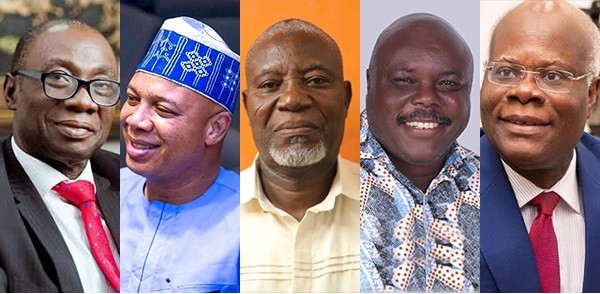
Parliament has found no evidence that former Adansi Asokwa Member of Parliament Kobina Tahir Hammond, popularly known as KT Hammond, or any other lawmaker received the alleged US$46,000 bribe tied to the approval of the 2015 AKSA Emergency Power Agreement. Speaker Alban Bagbin announced the finding on November 11, 2026, after an internal administrative review of Parliament's own records.
The review, commissioned by Bagbin in his capacity as Speaker and Chairman of the Parliamentary Service Board, examined the House's Votes and Proceedings, committee records, the report of the Committee on Mines and Energy and the resolution approving the agreement. It also drew on interviews with former and serving Parliamentary Service officers and a former chairperson of the Mines and Energy Committee.
What the AKSA bribery allegations were about
The allegations surfaced in August 2026 during proceedings in the United States involving Asante Kweku Berko, a former Goldman Sachs executive and former Managing Director of the Tema Oil Refinery. According to a US State Department statement, Berko and his associates paid more than US$1 million in bribes to Ghanaian government officials between 2015 and 2016 in connection with the development and financing of the AKSA power project, developed by Turkish energy company AKSA.
The same proceedings indicated that US$46,000 was allegedly paid to members of Parliament's Energy Committee to smooth the approval of the emergency power agreement. Hammond, then Ranking Member of the Energy Committee, was among the names caught up in the claims.
According to GhanaWeb, Parliament's records show the agreement was laid before the House on June 23, 2015 and referred to the Committee on Mines and Energy. The committee reported on July 16, 2015, and Parliament debated and approved the deal the following day, July 17, 2015.
KT Hammond's defence: 'Is KT Hammond that bloody cheap?'
Hammond rejected the allegations outright when he spoke to Citi News on August 10, 2026. He questioned how US$46,000 could have been shared among the 18 MPs on the committee and its secretariat staff, arguing the amount would amount to trivial sums for each person.
Is KT Hammond that bloody cheap?
His bluntness captured the mood of many Ghanaians who wanted the matter settled with facts rather than headlines. Now, three months on, the parliamentary review has given him and his colleagues on the 2015 committee a first measure of relief.
What the review could and could not do
Bagbin was careful to draw the limits of the exercise. He said none of the records examined or interviews conducted established that an MP or Parliamentary Service officer received the alleged payments, but he cautioned that the findings should not be read as proof that no payments were made, nor as an exoneration of anyone.
The review, he explained, was strictly an internal administrative exercise. It had no power to summon witnesses, take evidence under oath or compel the production of documents. It also had no access to bank records, financial transactions or communications held outside Parliament.
Only competent law enforcement agencies can investigate external financial transactions and other evidence relating to the allegations, the Speaker stressed. Citi Newsroom reported that Bagbin framed the review as Parliament doing its part to establish what happened during the consideration and approval of the agreement.
Bagbin refers the matter to the Special Prosecutor
The Speaker has directed that the review report and its supporting documents be formally transmitted to the Office of the Special Prosecutor and other relevant investigative bodies for further action. Adomonline reported that the referral covers the bribery allegations against members of the 2015 Energy Committee.
This is where the story moves from Parliament's corridors to the domain of investigators with real teeth. The OSP can access bank records, compel testimony and pursue the financial trail wherever it leads, powers the parliamentary review never had.
Why this matters for Ghana's business climate
Ghana's energy sector has long been the engine room of the economy, and emergency power agreements like AKSA's were signed in 2015 to keep the lights on during the dumsor era. Investors watching from London, New York and Istanbul want one thing above all: predictability. Scandals that linger without resolution scare capital away faster than any tariff.
That is why the speed and openness of this process deserve recognition. Parliament did not bury the allegations. It reviewed its own records, published its limits honestly and handed the file to the Office of the Special Prosecutor within three months of the claims becoming public. For a country competing for energy investment alongside Nigeria, Senegal and Côte d'Ivoire, that kind of institutional responsiveness is an asset.
The OSP now carries the responsibility of finishing the job. If its investigation confirms that no lawmaker took a dime, Ghanaian democracy will have answered a foreign allegation with evidence. If it finds otherwise, the culprits must face the full weight of the law, whoever they are.
Frequently asked questions
Did Parliament find that MPs took bribes in the AKSA deal?
No. Speaker Alban Bagbin announced on November 11, 2026 that an internal review found no evidence that KT Hammond, any other MP or any Parliamentary Service officer received the alleged US$46,000.
Does the review clear MPs of wrongdoing?
Not formally. Bagbin cautioned that the findings are not proof that no payments were made and not an exoneration, because the review lacked the power to summon witnesses or access bank records.
What happens next in the AKSA bribery case?
The review report and supporting documents have been referred to the Office of the Special Prosecutor and other investigative bodies, which have the mandate to examine external financial transactions.
Where did the allegations come from?
They emerged from US proceedings involving Asante Kweku Berko, a former Goldman Sachs executive and ex-Managing Director of the Tema Oil Refinery, in which US authorities said more than US$1 million in bribes was paid to Ghanaian officials between 2015 and 2016.