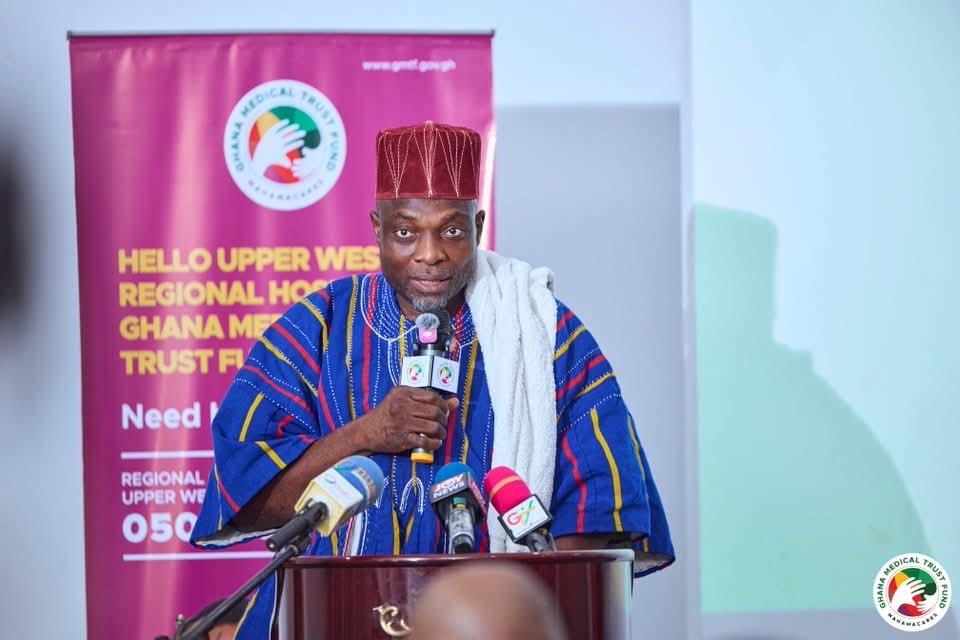
The Paramount Chief of the Pulima and Gandawii Traditional Area, Kuoro Osman Deiwia Nankpa III, has thrown his full weight behind the Ghana Medical Trust Fund, drawing on a personal kidney condition that cost him more than GH¢60,000 back in 2008. His endorsement came on November 10, 2026, at a stakeholder engagement and town hall meeting in the Sissala West District of the Upper West Region, part of the GMTF's regional sensitisation tour, according to GhanaWeb.
For a traditional ruler of his standing to describe a government health intervention as potentially life-saving is no small thing. Kuoro Nankpa III has lived the problem he now wants solved, and his story explains exactly why the Ghana Medical Trust Fund, popularly known as MahamaCares, matters to ordinary Ghanaian families.
When illness wipes out a family's finances
The chief's ordeal left him with more than medical bills. It exposed him, he said, to the enormous financial demands of managing serious illnesses and the emotional and economic strain they place on families, particularly those without the resources to afford specialised medical care.
Illness can abruptly disrupt the plans, livelihoods and financial stability of entire households, he observed, which makes it imperative for Ghana to strengthen interventions that prevent people from being denied essential treatment simply because they cannot pay. That is the gap the GMTF is built to close.
He described the Fund as one of the thoughtful and life-saving interventions introduced to support Ghanaians, and commended President John Dramani Mahama for instituting what he considered a visionary health policy. According to him, the Fund could become one of the enduring legacies of the President, long after his tenure in office.
The Fund could become one of the enduring legacies of President Mahama, long after his tenure in office.
What the Ghana Medical Trust Fund actually does
The Administrator of the GMTF, Adjoa Obuobia Darko-Opoku, explained that the Fund was established to provide financial support to eligible patients living with non-communicable diseases, while strengthening healthcare delivery through the provision of essential medical equipment to health facilities.
Her explanation is consistent with the Fund's stated mission. Adomonline reported that Ms Darko-Opoku said at the same engagement that the GMTF was created to address the financial barriers that prevent people living with non-communicable diseases from accessing specialised healthcare. MyJoyOnline also reported that the Fund targets non-communicable diseases, particularly cancer, kidney disease and cardiovascular conditions.
Launched on July 22, 2025, the Fund pays for specialised care for people with chronic non-communicable diseases, including cancers, heart and kidney disease, stroke and diabetes, according to 3News. The Fund is already moving beyond promises: it plans to equip the Eastern Regional Hospital by December as part of its rollout.
Regional leadership rallies behind the Fund
The Upper West Regional Minister, Charles Lwanga Puozuing, said the success of the Fund would depend largely on collective efforts to ensure its interventions reach the people who need them most. He assured the GMTF of the support of the Upper West Regional Coordinating Council and urged the media to play an active role in educating the public and correcting misconceptions about the Fund's operations and services.
That call for transparency and public education is exactly right. A fund of this kind lives or dies by public trust, and public trust grows where information flows freely.
What the medical community is saying
The Acting Medical Director of the Upper West Regional Hospital, Dr Philip Baabiineh, identified cardiovascular diseases, kidney conditions and other non-communicable diseases as significant causes of deaths in health facilities across the region. He pledged the hospital's commitment to facilitating access to GMTF support for eligible patients, and welcomed the Fund's efforts to train more specialist healthcare professionals to improve service delivery.
The Upper West Regional Director of the Ghana Health Service, Dr Josephat Ana-Imwine Nyuzaghl, called for a community-driven approach to public education on the Fund. He proposed the engagement of Community Health Nurses to educate residents at district and community levels, particularly in remote communities where information about specialised healthcare interventions can be limited.
Dr Nyuzaghl also called for stronger diagnostic capacity at the Upper West Regional Hospital, including the provision of an MRI machine, to improve diagnosis and access to specialised healthcare in the region. He assured the GMTF of the continued collaboration of the Ghana Health Service towards achieving its mandate.
Heart surgeons for the Upper West Region
Kuoro Nankpa III also appealed for the availability of heart surgeons in the Upper West Region, to improve access to specialised treatment and reduce the difficulties patients face when seeking advanced medical care outside the region. His appeal goes to the heart of a wider challenge: Ghana's specialised care remains concentrated in a few urban centres, forcing families in rural areas to travel long distances at great cost.
For Ghanaians in the diaspora watching these developments, this is a story worth following. A Fund that keeps families from financial ruin, backed by traditional authorities, regional government and the health service, is the kind of institutional progress that makes investment in Ghana's health sector a serious conversation.
The GMTF's regional sensitisation tour continues, and the real test now is delivery: equipment in hospitals, specialists in the regions, and eligible patients actually receiving support without ruinous bills.
FAQ
What is the Ghana Medical Trust Fund?
The Ghana Medical Trust Fund, also known as MahamaCares, was launched on July 22, 2025 to pay for specialised care for Ghanaians with chronic non-communicable diseases, including cancers, heart and kidney disease, stroke and diabetes.
Why does the Pulima Chief support the GMTF?
Kuoro Osman Deiwia Nankpa III spent more than GH¢60,000 treating an acute kidney condition in 2008, an experience he says showed him the financial strain families face with life-threatening illnesses.
What did health officials ask for in the Upper West Region?
Officials called for heart surgeons in the region, an MRI machine at the Upper West Regional Hospital, and the use of Community Health Nurses to educate remote communities about the Fund.