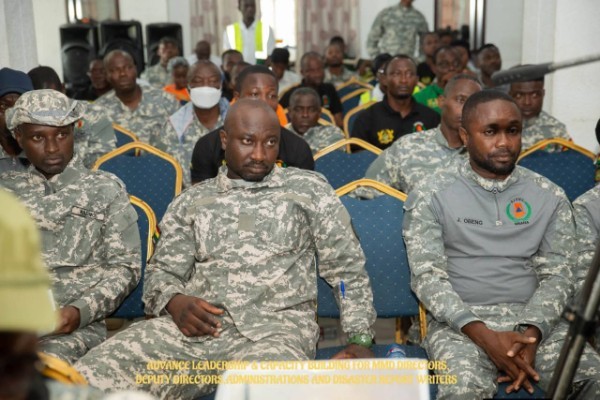
Nearly 250 officers of the National Disaster Management Organisation (NADMO) completed a four-day leadership and capacity-building workshop in Cape Coast on Friday, November 6, 2026, as the agency moves to shift Ghana's disaster response from reaction to prevention.
The training brought together Metropolitan, Municipal and District Directors, Deputy Directors, Administrators and Disaster Report Writers from across the Central Region under the theme: Resetting NADMO for Improved Performance in Disaster Resilience, according to GhanaWeb. Held at the SGS Auditorium of the University of Cape Coast from November 3 to 6, the programme focused on leadership, report writing, communication and the full cycle of disaster management: prevention, preparedness, response and recovery.
A deliberate shift from reaction to prevention
Samuel Essel, Deputy NADMO Regional Director in charge of Public Relations, said the workshop was designed to reposition the organisation toward a more proactive approach. NADMO is deliberately moving away from waiting for disasters to strike before acting, he said, stressing the need for early interventions that prevent crises or reduce their impact.
This is a welcome cultural change for a public institution. Ghana's disaster management has too often been measured by how quickly relief items arrive after a flood or a fire. Essel's message points to something better: building the skills and systems that stop small hazards from becoming national emergencies.
He also noted that the training sharpened participants' abilities in report writing, communication and information dissemination, improvements he said would strengthen both the organisation's operations and its public image. He encouraged institutions and members of the public who need assistance or clarification on NADMO's work to contact the Central Regional Office at the Regional Coordinating Council.
NADMO should lead the fight against galamsey, says UCC lecturer
One of the workshop facilitators, Dr. Suleman Dauda of the Department of Geography and Regional Planning at the University of Cape Coast, called for NADMO to be given a leading role in the fight against illegal mining, popularly known as galamsey.
He described the environmental destruction caused by illegal mining as a major disaster in its own right, warning that mercury and other harmful chemicals used by miners could expose affected communities to long-term health and environmental risks, including effects on children born in those areas.
Dr. Dauda argued that NADMO's existing structures, trained personnel and community-level presence position it to support efforts to tackle illegal mining and restore degraded lands. The organisation's network of community volunteers, he added, is a real asset for mobilising local people in environmental restoration.
He was clear about what is missing: adequate logistics, including drones, helicopters and other operational equipment, would be necessary to make that support effective. That is a direct invitation to government and private partners to invest in the agency's capacity.
Police and NADMO deepen collaboration
The Central North Regional Commander of the Ghana Police Service, DCOP Abraham Acquaye, used the platform to underline the importance of joint efforts between the security services and NADMO in ensuring public safety and effective disaster management.
He explained that the Police Service works closely with NADMO and other emergency response agencies at every stage of disaster management, from prevention and preparedness to response and recovery. While NADMO coordinates disaster management activities, the Police maintain law and order and protect lives and property during emergencies.
The nature of a disaster and the expertise required determine which institution takes the lead, DCOP Acquaye said, while the others provide the necessary support.
Ghana joins a global movement toward professional disaster management
The Central Region workshop reflects a wider international trend of professionalising disaster management through structured training. In the United States, the Federal Emergency Management Agency runs professional development and training programmes to enhance the abilities of officials at federal, state and local levels, as well as volunteer organisations and the private sector, according to FEMA. Frameworks such as the National Incident Management System similarly provide structured training for personnel in management and supervisory roles, as documented by TEEX.
Other countries are going further still. Japan launched a new national disaster management agency in 2026 with more than 350 workers overseeing preparedness, emergency response and reconstruction, CNA reported. Ghana's neighbours on the continent know the stakes too well: from flooding in Sahel cities to building collapses in coastal capitals, the cost of weak preparedness is measured in lives and lost economic output.
For Ghana, the economics are straightforward. Every cedi invested in preparedness saves multiples of it in emergency relief, reconstruction and lost productivity. A NADMO that anticipates rather than reacts protects farms, markets, schools and the small businesses that power the Central Region's economy.
What happens next
The four-day workshop gave participants and facilitators a platform to exchange knowledge, reflect on lessons learnt and strengthen professional relationships, according to GhanaWeb's report. The report was filed by Faustina Abraham.
The real test now lies in implementation. If the 250 trained officers translate their new skills into community-level preparedness plans, and if government answers Dr. Dauda's call for logistics, the Central Region could become a model for how Ghana resets its disaster management for a more resilient future.
Frequently asked questions
What was the theme of the NADMO workshop in the Central Region?
The theme was Resetting NADMO for Improved Performance in Disaster Resilience.
When and where did the NADMO training take place?
The four-day workshop ran from Tuesday, November 3 to Friday, November 6, 2026, at the SGS Auditorium of the University of Cape Coast.
Who attended the NADMO capacity-building workshop?
Nearly 250 participants and facilitators attended, including Metropolitan, Municipal and District Directors, Deputy Directors, Administrators and Disaster Report Writers from the Central Region.
Why did a UCC lecturer want NADMO involved in fighting galamsey?
Dr. Suleman Dauda said illegal mining causes environmental destruction comparable to a major disaster, and that NADMO's community structures and trained personnel make it well placed to support restoration efforts if given adequate logistics.