
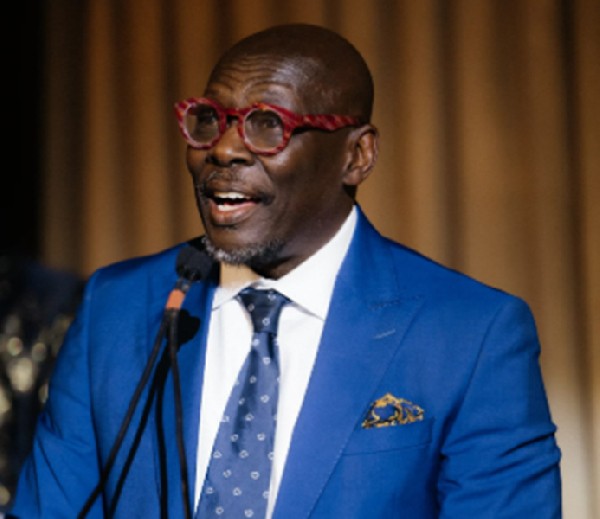
Professor Ato Quayson has urged Ghanaians to challenge injustice and protect critical voices, invoking philosopher Anton Wilhelm Amo at a University of Ghana lecture on November 24, 2026.
The Stanford University professor presented Amo’s life as a lesson in civic courage. Ghanaians, he argued, should question authority, expose unfair treatment and defend the freedoms that allow democratic accountability to work.
A philosopher who refused second-class status
Quayson delivered the sixth Anton Wilhelm Amo Public Lecture under the theme, “The Genesis of Doubt: From Anton Wilhelm Amo to Ghana’s Democracy.” The Institute of African Studies and the Department of Philosophy and Classics organised the event with the university.
According to GhanaWeb’s report on the lecture, Quayson recalled Amo’s opposition to the mistreatment of the people of Axim by the Dutch. That protest reportedly led to Amo’s imprisonment and eventual death, which Quayson described as a form of martyrdom.
Amo’s story also carries meaning for Africans living abroad and members of Ghana’s diaspora. Africa Rebirth’s biographical account says he was born in Ghana around 1703, taken to Europe as a child, awarded a doctorate in philosophy in 1734 and employed as a lecturer at German universities. Racism later drove him out of European academic life, and Europe forgot him for 200 years.
Quayson stressed that Amo’s long stay in Europe did not make him willing to accept inferior treatment. Even though he probably no longer spoke his native Nzema after years abroad, he retained a firm connection to his homeland and its people.
“His strong moral compass prevented him from remaining quiet when he witnessed the way that the Dutch were treating his people at Axim,” Quayson said.
“He spoke up and was incarcerated, dying in what we must now recognise as a veritable form of martyrdom in protest against the cynical inequities imposed by the Europeans on his people,” he added.
Why doubt matters to democracy
The lecture moved beyond biography to examine doubt as a tool for inquiry. Quayson distinguished fear and apprehension from uncertainty about truth or reality, saying the second meaning had particular relevance to philosophy.
He drew on French philosopher René Descartes, who systematically questioned his senses, his experience of wakefulness and the difference between dreams and reality. Descartes arrived at the cogito, the argument that a person must exist before that person can doubt.
For Quayson, this intellectual tradition has a public purpose. Doubt gives citizens a disciplined way to test established beliefs, challenge official claims and demand answers from those who exercise power.
That argument speaks directly to Ghana’s democratic development. A confident society does not need every citizen to agree with government, but it does need space for evidence, criticism and disagreement.
The journalists and satirists Quayson named
Quayson praised Ghanaian journalists and public commentators who have questioned wrongdoing without favouring either of the country’s main political traditions. He named veteran journalist Kwesi Pratt Jnr and investigative journalist Manasseh Azure Awuni among the voices serving as a civic conscience.
“In Ghana, our journalists and commentators of the recent past and current times, such as Kwesi Pratt, Manasseh Azure, and so on, have acted as the welcome voices of civic conscience and have tackled knotty problems without fear or favour to either political tradition,” he said.
He also recognised academic and satirist Kwesi Yankah, who wrote the Abonsam Fireman column, and Kwesi Opoku Acheampong, associated with Shoes Are Repairing Here. Their satirical commentaries during the 1980s and 1990s exposed public issues at considerable personal risk.
“Both of them showcased satirical commentaries in the 1980s and 1990s that, at the time, were undertaken at great risk to their persons. So these were very, very courageous satirists,” Quayson said.
The examples connected two generations of Ghanaian public life. Print columnists once used satire to question authority under difficult conditions, while journalists and commentators now work across radio, television and digital platforms with their own pressures and audiences.
Protecting even controversial commentary
Quayson extended his defence to contemporary commentators whose style can provoke strong disagreement, including Kevin Taylor and Captain Smart. Their commentary, he said, can arouse suspicion about the state and its officials, yet democracy should still protect their right to speak.
“Even their form of commentary ought to be protected because they also represent the hallowed tradition of irreverence,” he said, linking that tradition to fearlessness in addressing the state and its functionaries.
His position sets a demanding standard. Protection for speech cannot depend on whether the speaker is polite, popular or aligned with a preferred political camp. Citizens remain free to dispute claims and demand evidence, while the democratic principle of open criticism applies across political lines.
A civic lesson for Ghana’s next chapter
For Ghana’s entrepreneurs, professionals and diaspora community, the lecture offers more than a history lesson. Open institutions give people a way to question public decisions, expose misconduct and press for better government. Those habits support the transparency that citizens and investors expect from a serious democracy.
Quayson did not present courage as the exclusive duty of journalists. Amo’s example places responsibility on anyone who witnesses injustice, whether that person holds a university post, runs a business, works in public service or follows Ghanaian affairs from abroad.
The practical challenge is clear: defend the space in which uncomfortable questions can be asked. Ghana gains stronger public debate when critical voices can speak without fear and when their claims face scrutiny in return.
Questions about Anton Wilhelm Amo and the lecture
Who was Anton Wilhelm Amo?
Anton Wilhelm Amo was a Ghanaian-born philosopher who earned a doctorate in 1734 and lectured at German universities. He later opposed the Dutch mistreatment of people in Axim.
What did Ato Quayson ask Ghanaians to do?
Quayson asked Ghanaians to emulate Amo by speaking against injustice and protecting critical voices, including controversial commentators whose political criticism contributes to democratic accountability.
Where and when was the lecture held?
The sixth Anton Wilhelm Amo Public Lecture took place at the University of Ghana on November 24, 2026, with participation from the Institute of African Studies and the Department of Philosophy and Classics.