
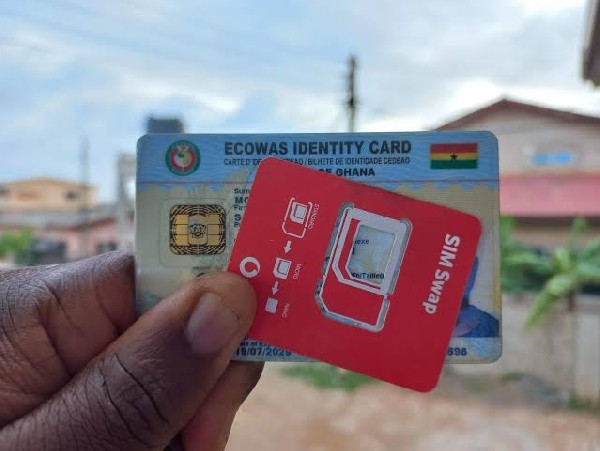
A lawsuit filed in Accra on November 24, 2021, turned Ghana’s mandatory biometric SIM card re-registration into a national test of privacy, security and digital trust.
Private legal practitioner Francis Kwarteng Arthur challenged the directive at the Accra High Court, arguing that the collection of sensitive personal data threatened fundamental rights. The courts ultimately upheld the National Communications Authority’s position, but the case established questions that still matter to subscribers, businesses and Ghana’s digital economy.
Why Ghana’s SIM card re-registration went to court
The registration exercise began in October 2021. Mobile subscribers had to link their SIM cards to the Ghana Card, the national identity document. Government officials presented the policy as a way to clean up subscriber records, fight mobile money fraud, limit criminal activity and support national security.
Arthur’s objection focused on the information demanded during registration. His case covered fingerprints, palmprints, iris scans and facial patterns, and questioned whether telecommunications companies had enough legal authority to collect and keep those details, according to GhanaWeb’s account of the case.
He argued that the directive put rights to privacy, administrative justice, speech, information and property at risk. His application asked the court to stop the NCA from directing mobile network operators to collect, store or use the information while the main case was heard. He also sought a suspension of biometric data collection by the three operators named in the action.
The respondents were the NCA, Ghana Telecommunications Company Limited, then operating Vodafone Ghana, Scancom PLC, operator of MTN Ghana, and AirtelTigo Ghana Limited. The Attorney General was also placed on notice.
What the courts decided
The legal action did not stop registration. On December 9, 2021, the Accra High Court struck out Arthur’s application for an interlocutory injunction after he withdrew it. The court had indicated that it could not impose the requested restraint before the application was properly heard, with the wider public interest also considered.
The substantive case continued until July 13, 2022, when the Human Rights Division of the High Court dismissed the challenge. It held that the NCA’s directive was lawful and that the authority had not violated the law.
Registration deadlines were extended several times before the final date of May 31, 2023. Throughout the exercise, subscribers faced registration difficulties and the possibility of losing mobile services.
The consequences reached well beyond telephone calls. A Ghanaian mobile number can connect its owner to mobile money, banking, customer payments, job opportunities and daily family communication. For a trader receiving payments or a diaspora household sending support home, reliable registration and trusted data systems are practical business infrastructure.
The economic cost of getting registration wrong
The court ruling settled the legality of that directive, but it did not remove the need for clear procedures and public confidence. The Labari Journal reported that the exercise was affected by fraud, institutional dysfunction and repeated extensions, with nearly nine million SIM cards disconnected before its closure in May 2023.
That figure shows why execution matters as much as policy design. A secure identity system can help payment providers verify customers and give businesses cleaner records. A confusing exercise can instead interrupt commerce, weaken access to services and leave people uncertain about who holds their personal information.
Ghana already has a legal foundation for addressing those concerns. The Data Protection Act, 2012 (Act 843), sets rules for protecting personal information and regulates how organisations collect, process, retain and disclose data. Applying those rules visibly, with clear responsibilities and accessible remedies, is central to building confidence in digital services.
Why the privacy debate has returned in 2026
The dispute has fresh relevance as Ghana considers another registration round. In March 2026, policy think tank IMANI Africa described the proposed exercise as the fourth in fifteen years and raised concerns about procedural errors, data protection failures and procurement opacity.
That record offers policymakers a clear agenda. Security goals should be explained in plain language. Data requirements should be limited to what the exercise needs, and subscribers should know how long information will be retained, who can access it and where they can seek redress.
Transparent procurement and realistic deadlines can also reduce disruption. Registration systems should work for rural subscribers, people with limited connectivity and small businesses that cannot afford long queues or interrupted payment channels.
Ghana’s ambition to build a digitally identifiable population remains compatible with strong privacy protections. The November 2021 lawsuit showed that citizens will demand both. The next measure of progress is whether institutions can deliver secure registration without asking the public to choose between safety, access and rights.
Frequently asked questions
Who challenged Ghana’s biometric SIM registration directive?
Francis Kwarteng Arthur, a private legal practitioner, filed the challenge at the Accra High Court on November 24, 2021. He questioned the collection, storage and use of subscribers’ biometric information.
Did the lawsuit stop SIM card re-registration?
No. The injunction application was struck out on December 9, 2021, after Arthur withdrew it. The High Court dismissed the substantive challenge on July 13, 2022, and ruled that the NCA directive was lawful.
Which law protects personal data in Ghana?
The Data Protection Act, 2012 (Act 843), provides the framework for protecting personal information and regulating its collection, processing, retention and disclosure by organisations.