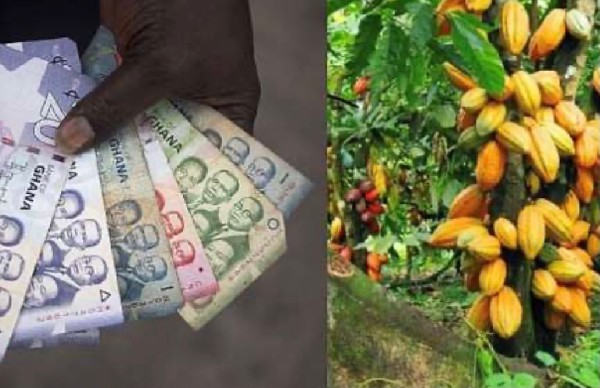
COCOBOD's new cocoa notes have become the first serious rival to government Treasury bills for the savings of Ghana's banks, pension funds and insurers, and the early numbers show investors are paying attention. Cocoa Capital PLC, the financing vehicle of the Ghana Cocoa Board, offered 266-day commercial paper at 11 per cent in October 2026, more than a full point above the 9.71 per cent the government paid on its 364-day Treasury bill at the previous week's auction.
The development, reported by GhanaWeb, signals a new competitive dynamic in Ghana's domestic debt market, one that could deepen the market, discipline government borrowing costs and give institutional investors a genuine choice for the first time in years.
What the auction numbers show
Demand for the government's one-year bill weakened just as the cocoa notes came to market. Bank of Ghana auction data shows investors bid GH¢1.21 billion for the 364-day bill on September 18. By the auctions of October 2 and October 9, when the first cocoa tranche was sold and settled, bids had fallen to roughly GH¢475 million and GH¢469 million respectively.
Demand has since recovered. At the auction held two days after the cocoa notes were listed on the Ghana Stock Exchange, bids for the one-year bill rose to GH¢1.12 billion.
The figures do not prove money moved directly from one instrument to the other. Demand for the one-year bill had already been sliding for months as yields dropped, from about GH¢8.1 billion in a single week in late July, when the bill paid close to 13 per cent.
Government refuses to pay up
Last Friday's auction offered the sharpest sign yet of the new bargaining power on the investor side. Some bidders demanded as much as 11.89 per cent for the 364-day bill, above the 11 per cent on the cocoa notes. The government refused, accepting no bids above a discount rate of about 8.93 per cent and taking only GH¢588 million, or 52 per cent, of what was offered for the one-year bill.
Across all three bills, the Treasury turned down almost GH¢1.7 billion in bids and fell about GH¢1.5 billion short of its GH¢5.02 billion target. The government is now seeking GH¢3.8 billion at its next auction.
Analysts, writing before the cocoa notes were launched, had benchmarked the commercial paper against the 364-day bill and argued Cocoa Capital would need to pay enough of a premium to make investors indifferent between cocoa-backed securities and safer sovereign paper. They also noted that domestic liquidity, though substantial, was constrained by competing sovereign, bank, money-market and fixed-income options. Investors, they said, have money available but are increasingly unwilling to accept ever-lower yields.
How the cocoa notes fared
The cocoa notes faced their own test of appetite. Cocoa Capital received bids of about GH¢3.586 billion from 38 institutional investors for its first tranche, short of the GH¢4 billion target, and accepted GH¢3.396 billion.
Pricing explains part of the shortfall. The 11 per cent yield sat at the top of COCOBOD's own guidance range of 10.5 to 11 per cent, but at the bottom of the 11 to 12.5 per cent range analysts expected, with most forecasting 11.5 to 12 per cent.
Competition is set to intensify. Cocoa Capital plans two more commercial paper tranches of GH¢4 billion and GH¢6 billion under its GH¢16.3 billion programme, plus GH¢2.3 billion in bonds of up to five years, which analysts expect to price between 13.5 and 15 per cent. COCOBOD deputy chief executive Ato Boateng has said the board could return to the market about two weeks after its first issue.
Why competition is good news for investors
For Ghanaian savers and the institutions managing their money, this rivalry is welcome. The 91-day Treasury bill currently yields about 4.62 per cent, below September's inflation of 5.2 per cent, meaning it loses money in real terms. The cocoa notes offer one of the few safe-looking ways to earn a real return in cedis, and that matters for pension funds protecting the retirement savings of ordinary Ghanaians, including members of the diaspora sending money home.
The mechanics mirror what happens in mature markets, where investors bid for government paper at regularly scheduled auctions and trade it in an active secondary market, as Vanguard explains in its guide to Treasury securities, and where institutions can compare active bids and offers across the full range of bills and bonds, as Fidelity describes. Ghana's market is now producing that same price discovery at home.
The stakes for farmers are real. COCOBOD needs the cash to buy this season's crop after its offshore syndicated loan collapsed in the 2023/24 season. If the board is forced to raise its own rates to fill the next tranches, the cost of funding the crop will rise, leaving less room to improve the price paid to farmers.
What to watch next
Two outcomes will tell the story. If investors increasingly use the cocoa notes as a benchmark, the Treasury may find it harder to sell longer-dated bills at current rates, which would pressure borrowing costs ahead of the 2027 Budget. If the next cocoa tranches price well and draw strong demand, it will show Ghana's domestic market is deep enough to fund both the government and its biggest export crop at rates each is willing to pay.
Either way, the era of one dominant borrower setting terms is over. Ghana's savings are now being made to work harder, and that is a win for transparency, for investors and for the long march toward a deeper, more honest capital market.
Frequently asked questions
What are Ghana's cocoa notes?
They are commercial paper issued by Cocoa Capital PLC, the financing vehicle of the Ghana Cocoa Board, launched to raise money for buying the cocoa crop. The first tranche offered 266-day paper at 11 per cent and was listed on the Ghana Stock Exchange in October 2026.
How do cocoa notes compare with Treasury bills?
The 266-day cocoa paper pays 11 per cent, above the 9.71 per cent the government paid on its 364-day Treasury bill at the last auction before launch, making the two close alternatives for investors placing money for roughly a year.
Why is competition between the two important?
It gives investors a real return above inflation for the first time in months and pushes the government to price its borrowing more honestly, which supports fiscal discipline and a deeper domestic capital market.