
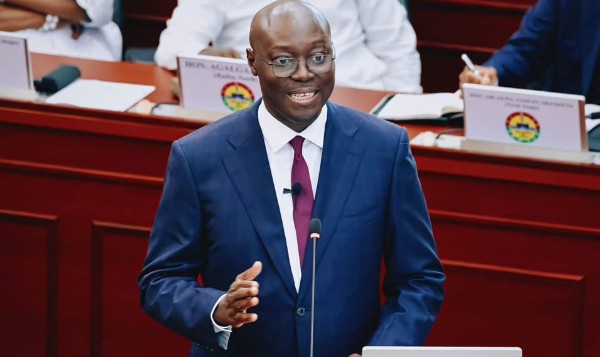
Former Finance Minister Dr Mohammed Amin Adam on Thursday, November 26, 2026, challenged his successor, Dr Cassiel Ato Forson, to disclose the full financial terms of Ghana’s voluntary DDEP bond buyback.
The offer invites bondholders to sell 82 days before the government is due to repay them in full on February 16, 2027. Amin Adam said early sellers could sacrifice income and called for a clear comparison between selling now and waiting, GhanaWeb reported.
The dispute places investor communication at the centre of Ghana’s latest debt-management operation. For pensioners, financial institutions and Ghanaians abroad watching the cedi market, the immediate question is whether the offer leaves sellers better or worse off.
What bondholders could lose by selling early
Amin Adam said an investor who waits until February should receive the full repayment and the promised interest. Selling early, he argued, means surrendering a bond yielding 8.35% a year and potentially moving into a 91-day Treasury bill earning about 4.5%.
“Anyone who sells early gives up a bond that pays 8.35% a year,” he said in a Facebook post.
His estimate puts the loss at about 86 pesewas for every GH¢100 of bonds if the proceeds are reinvested immediately in Treasury bills. A delay before reinvestment would increase the loss, while keeping the money idle until February would mean forfeiting all the interest available by waiting.
The bonds covered by his calculation are worth GH¢28.58 billion. Amin Adam gave three estimates of the collective loss if the entire amount is sold back early:
- About GH¢247 million if holders reinvest immediately.
- About GH¢346 million if the proceeds remain idle for four weeks before reinvestment.
- About GH¢536 million if the money is not reinvested before February.
He described the figures as estimates, not a final assessment of the offer. The actual outcome will depend on the purchase price, the treatment of interest already earned and the return investors can secure afterwards.
Questions over the GH¢100 price cap
Amin Adam also questioned the reported decision to cap the government’s purchase price at GH¢100 for each GH¢100 bond. Based on current Treasury bill rates, he calculated that such a bond is worth about GH¢100.90, excluding interest already accrued.
“If the government wants people to give up their February payment, why does it cap its price below what the bond is worth?” he asked.
He said the auction notice should explain how accrued interest will be paid rather than leaving individual investors to establish that themselves. MyJoyOnline also reported his demand that Forson uphold the standards he championed while in opposition.
That distinction matters because a headline purchase price alone does not show an investor’s total return. A complete calculation would include accrued interest, the amount received today and the payment guaranteed in February.
DDEP sacrifices and Ghana’s recovery debate
The former minister framed the buyback against the sacrifices already made under the Domestic Debt Exchange Programme. Bondholders accepted lower interest payments and longer repayment periods as Ghana worked to reduce its debt burden.
“They helped carry the cost of fixing the economy, and the government now celebrates the fall in the national debt to GDP ratio,” he said.
Amin Adam connected that contribution to the parliamentary majority’s argument that an improved economy makes a new GH¢720 million presidential jet affordable. He said investors who bore part of the adjustment cost could reasonably question why they were now being offered terms that might reduce their returns.
His preferred response is compensation or relief for those sacrifices, rather than a transaction that leaves participants poorer. He nevertheless accepted that buybacks can serve a legitimate debt-management purpose and noted that they were used before the current administration.
“A fair approach would pair liability management with meaningful relief for the investors who bore the cost of the country’s recovery,” he said.
Will the government publish a side-by-side comparison?
Amin Adam proposed a direct disclosure test. For every GH¢100 of bonds, he wants the government to publish what a holder receives by selling today, including accrued interest, beside the full amount promised in February.
He also wants an explanation of why the transaction is fair to investors who already accepted losses and delays under the DDEP. That would give holders a common basis for deciding whether immediate liquidity justifies the possible reduction in income.
The former minister’s sharpest criticism concerned political consistency. He recalled Forson standing with pensioners and other bondholders while in opposition and promising to defend their interests.
“The Minister demanded this kind of accountability when he was in opposition. Bondholders are entitled to demand it from him now,” he said.
The buyback therefore presents two separate tests for the Finance Ministry. One is financial: whether the price and interest treatment compensate sellers fairly. The other is institutional: whether the government provides enough information for investors to verify that judgment before the February repayment date.
Frequently asked questions
When will the DDEP bonds be fully repaid?
The government has promised full repayment on February 16, 2027. Amin Adam said the voluntary buyback was announced 82 days before that date.
How much could DDEP bondholders lose?
Amin Adam estimated collective losses of GH¢247 million with immediate reinvestment, GH¢346 million after four idle weeks and GH¢536 million without reinvestment before February.
What disclosure is Amin Adam demanding?
He wants the government to show, for every GH¢100 of bonds, the proceeds from selling today and the payment due in February, alongside a clear explanation of accrued interest.