
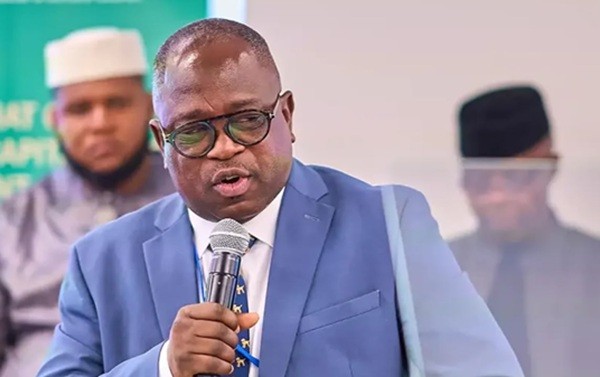
Minister of State for Climate Change and Sustainability, Seidu Issifu, has called for a stronger focus on locally grown plant-based foods to improve nutrition, support farmers and make Ghana's food system more resilient to climate change.
Speaking at a validation workshop on Ghana's Draft National Plant-Based Food Systems Plan in Accra on October 28, 2026, he said the country must find better ways to use its agricultural resources to address food security and climate challenges.
He said Ghana could make better use of its agricultural resources, including indigenous crops, legumes, fruits, vegetables, roots and tubers, to improve food production, create jobs and reduce dependence on imported food.
Ghana moves to validate National Plant-Based Food Systems Plan
He noted that agriculture, which supports millions of livelihoods, was increasingly affected by climate-related problems such as irregular rainfall, droughts, floods and declining soil quality.
According to GhanaWeb, the minister said the plan must reflect Ghana's local conditions and be guided by scientific evidence and the country's food culture.
He noted that Ghana also faced other problems, including pressure on land and water resources, environmental damage and the need to improve nutrition.
The minister said these challenges required a coordinated approach that linked agriculture with climate action, public health, trade, investment and environmental protection.
What the plan means for food security
According to MyJoyOnline, the minister said promoting more plant-rich food production and consumption, guided by scientific evidence, local realities and traditional food culture, could contribute to climate resilience, nutrition security and sustainable livelihoods.
He stressed, however, that the proposed plan must reflect Ghana's local conditions and be guided by scientific evidence and the country's food culture.
Seidu Issifu urged participants at the workshop to carefully review the draft plan and ensure it addressed the country's development needs.
He said the final document must go beyond setting out goals and clearly identify practical actions, the institutions responsible for carrying them out and how the proposed activities would be funded.
According to 3News, the minister has also stressed that climate action must protect farmers, women, young people and vulnerable communities, particularly as flooding, drought and environmental degradation threaten livelihoods and food security.
The minister outlined four key issues for stakeholders to consider: whether the plan supports Ghana's development priorities, whether it is practical and can be implemented, whether it reflects national realities, and whether it provides a clear basis for funding and accountability.
He noted that government agencies, farmer groups, research institutions, private businesses and development partners would all have important roles to play in implementing the plan.