
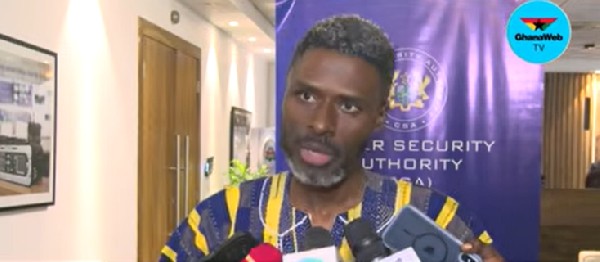
Ghana's Cyber Security Authority (CSA) has called for a national policy restricting children below the age of 13 from accessing social media, a proposal that could reshape how young Ghanaians experience the internet.
Martin Agyei Aboagye, Child Online Protection Manager at the CSA, made the call on October 23, 2026, during the Child Online Protection Digital Parenting Forum, according to GhanaWeb. His push comes as Ghana records rising cases of cyberbullying, cyber grooming and sextortion targeting minors.
Why the CSA wants an age restriction on social media
Aboagye said children far younger than 13 already run their own social media accounts, often sharing content that adults would avoid publishing.
“In our work, we meet a lot of kids way below 13, 8, 9, 10, have social media accounts, their own accounts, and the kind of content they share there is something that even older people like us won't even dare to share,” he told GhanaWeb.
For him, the answer is straightforward: Ghana needs a firm policy threshold, and it needs one soon.
“I think it's a matter of policy, and personally, if you ask me, I think we should take this thing seriously and make sure kids below this threshold don't have access to social media,” he said.
Digital parenting takes centre stage
Beyond regulation, Aboagye urged parents and guardians to embrace digital parenting. He defined parental control as the practical steps parents can take to monitor what their children do online and respond appropriately when problems surface.
He cited cases where children share inappropriate content with others, stressing that parents must learn to spot such incidents and act quickly. Parents who struggle with the technical side, he added, can seek help from people with the right knowledge to configure controls on their children's devices.
“We are seeing increasing numbers of cyberbullying, cyber grooming, and then sextortion, so that was the reason why we thought it was important to put this together,” he explained.
CSA partners UNICEF to protect children online
The CSA is not working alone. Aboagye disclosed that the authority is collaborating with the United Nations Children's Fund (UNICEF) and other stakeholders to strengthen protections against online child abuse.
Earlier in 2026, a meeting at the Volta Serene Hotel in the Volta Region brought the partners together to develop guidelines for telecommunications companies and service providers. The guidelines aim to ensure appropriate content delivery and to speed up the removal of material showing the abuse of children online.
“We are doing a lot in that space, together with UNICEF. Earlier this year we had a meeting at the Volta Serene Hotel in the Volta Region, where we are developing guidelines to make sure the telcos and all service providers are making sure they are providing appropriate content and, again, help us take down content that has to do with the abuse of children online,” he said.
Safety by design in Ghana's tech ecosystem
Aboagye also pressed for safety-by-design principles to be built into digital applications and emerging technologies, so that children's protection is considered from the development stage rather than patched on afterwards.
“We are making sure we we incorporate safety by design into every app and every form of tech that is coming out to make sure that children are safe while using the internet,” he stated.
The conversation has already reached government level. According to Aboagye, the Minister for Communications raised concerns earlier, and discussions on age restrictions are now on the table. Implementation, he noted, depends on national policy decisions and the willingness of political leaders to act.
He expressed confidence that a solid policy framework can be developed once authorities acknowledge the dangers children face online and commit to tackling them.
Ghana joins a global movement on child online safety
Ghana would not be acting in isolation. According to Wikipedia's overview of online age verification laws, many countries and jurisdictions have passed or proposed laws since 2023 requiring age verification for social media and other digital services, all aimed at protecting young users from harmful content.
In the United Kingdom, the House of Commons Library reports that supporters of a social media ban for children argue it would improve online safety, while critics warn of unintended consequences. The debate shows the complexity of regulating digital spaces without cutting children off from educational opportunity.
India offers another lesson. As Rediff.com reported, the country's Supreme Court refused an age-based internet ban for children in an October 15 ruling, stating that children have a fundamental right to access the internet and that denying it outright would be absurd.
These global precedents suggest Ghana's path will require balance: protecting minors from exploitation while preserving the digital skills that will drive the country's future economy.
What happens next for Ghana's digital safety policy
Aboagye called for the national conversation to begin as soon as possible. He argued that stronger age restrictions, combined with parental supervision and cooperation from technology companies, can reduce children's exposure to harmful online experiences.
“I think we should take this thing seriously and make sure kids below this threshold don't have access to social media. I think it's a conversation that has to be had as soon as possible,” he added.
For a country positioning itself as a digital economy leader in West Africa, the CSA's proposal marks a decisive step toward making the internet safer for its youngest citizens. The question now is whether policymakers will match that urgency with action.
Frequently asked questions
What is the proposed social media age limit for children in Ghana?
The CSA's Martin Agyei Aboagye has proposed a national policy restricting children below 13 from accessing social media platforms in Ghana.
Why does the CSA want to restrict children's social media access?
Rising cases of cyberbullying, cyber grooming and sextortion against minors, plus children as young as 8 running their own accounts, prompted the call for stronger protections.
Who is the CSA working with to protect children online?
The Cyber Security Authority is partnering with UNICEF and other stakeholders, including telecommunications companies, to develop content guidelines and remove child abuse material online.