
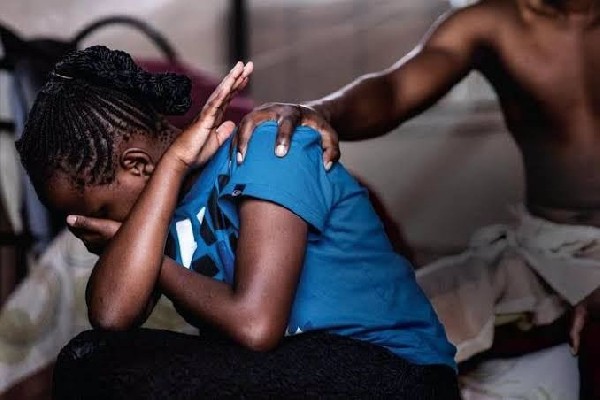
A Ghanaian mother said on Friday, November 20, 2026, that relatives of an interdicted police officer are conditioning support for her HIV-positive daughter on withdrawing her sexual abuse complaint.
The woman said she has been covering most of the senior high school student’s medical, food and education costs herself. She appealed for public assistance while insisting that the circumstances of the alleged abuse have strengthened her determination to pursue the case, according to GhanaWeb.
Family accused of linking help to withdrawal of complaint
The mother told reporters that the officer’s relatives had made their position clear during her attempts to obtain financial help. They reportedly said his interdiction from the Ghana Police Service had left him without money to support the child.
She said the family offered a different arrangement: abandon the complaint and they would help look after the girl.
“They told me that their brother has been interdicted so he doesn’t have any money to support me. They said I should forget about the case, then they will help me take care of the child, even if it means sending her abroad,” she recounted.
The proposal placed the mother under severe financial pressure. She acknowledged that the difficulty of providing for her daughter and her other children had brought her close to withdrawing the police complaint.
She said she had nevertheless decided to continue seeking justice. Her account, also carried by Adomonline, presents the requested assistance not as a dispute between adults, but as a question of whether a child can maintain treatment and schooling while the complaint proceeds.
Medication, food and school visits every two weeks
The girl requires regular medical attention and medication, according to her mother. Those needs sit alongside school expenses and the everyday cost of food, creating a burden that the woman said she can no longer manage comfortably on her own.
She travels to her daughter’s school every two weeks to deliver medication. She also prepares food for those visits because she has been advised that the girl should eat properly whenever she takes her medicine.
That routine gives a clear picture of the support now being requested. It involves reliable access to prescribed medication, suitable meals, transport for the school visits and the resources to keep the student in education.
The mother said the absence of financial assistance from the girl’s father has made these responsibilities harder, particularly because she also has other children to care for. She did not say that she intended to interrupt her daughter’s treatment or education, but described the mounting demands as increasingly difficult.
Background to the alleged abuse
The case first attracted public attention in May 2026. The mother accused the girl’s biological father, then described as a Police Inspector stationed at Garu in the Upper East Region, of sexually abusing the child from the age of 10.
She further alleged that the abuse resulted in a pregnancy that was terminated at home. Subsequent medical tests established that the girl was HIV-positive, according to the mother’s account.
The alleged abuse reportedly emerged after the girl disclosed what had happened during a hospital visit. That disclosure prompted the mother to file a police complaint.
The woman later raised concerns about the pace of the investigation. She said she had submitted the child’s medical report to the police, but was troubled by delays.
The matter was referred to the Domestic Violence and Victim Support Unit, known as DOVVSU, in Koforidua. It was subsequently transferred to the unit’s national headquarters for further attention.
The officer’s interdiction is central to the family’s stated explanation for not providing money. The published accounts do not report a court judgment resolving the allegations, and the mother’s claims remain the basis of the complaint she wants investigators to pursue.
Mother reports no contact from government officials
Beyond her disagreement with the suspect’s relatives, the woman expressed disappointment with public authorities. She said no government official had contacted her to establish the family’s circumstances or offer assistance.
That claim adds an institutional dimension to her appeal. Alongside the criminal complaint, she is asking who will help meet the immediate costs facing a child whose treatment and education continue while the investigation remains unresolved.
The mother did not limit her request to state agencies. She appealed to members of the public, philanthropists and other well-meaning individuals, a call that may resonate with Ghanaians at home and diaspora readers seeking practical ways to support children in difficulty.
Her stated priorities are medication, feeding and education. The reports did not publish a verified fundraising contact or payment channel, leaving the organisational details of any assistance unclear.
Support and justice remain separate needs
The mother’s account draws a firm distinction between accepting help and abandoning the complaint. She said financial hardship had nearly forced her to step back, but the alleged abuse and its consequences kept her pursuing the matter.
For now, she plans to continue the two-week school visits, provide the food recommended around her daughter’s medication and seek assistance with the costs. Her appeal leaves the next steps with investigators, potential supporters and public officials she says have yet to contact her.